The web is shrinking. Or at least, it is becoming significantly more contained within Google’s own ecosystem.
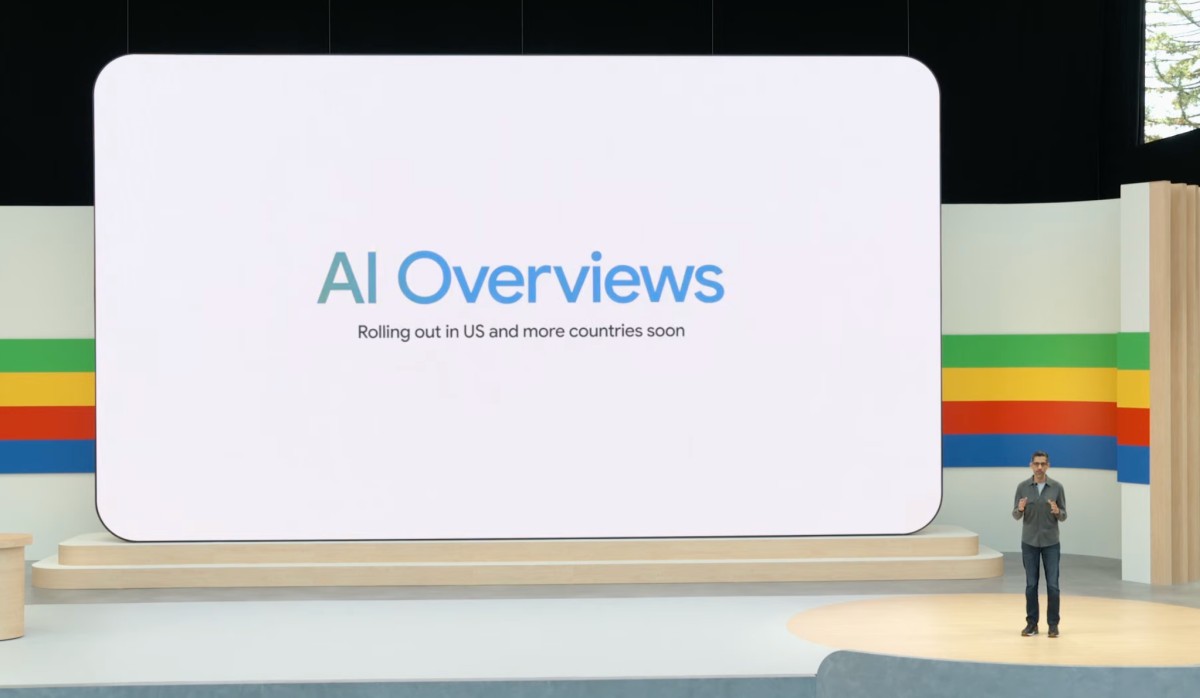
New data paints a stark picture. In just twelve months, AI-generated answers have gone from a fringe feature to the primary interface. According to Similarweb, AI Overviews now appear in 43% of Google searches. That’s a massive leap from just 15% a year ago. Users aren’t just tolerating this shift. They are adopting it as the new default, regardless of personal preference.
The rise of the integrated search journey
What started as a simple layer on top of traditional results has morphed into a distinct search journey. Google is dropping users directly into AI Overviews. From there, many continue their research via the conversational AI Mode.
The growth numbers are hard to ignore. Visits to AI Mode climbed from 126 million in June to 279 million in May 2026. This isn’t just about volume. It’s about behavior.
We are witnessing a fundamental change in query structure. People are ditching short, keyword-heavy searches for longer, natural language questions. They want to talk to the machine. They want it to do the legwork. Consequently, time spent on Google is increasing. The platform is no longer just a tool for discovery. It has become the destination itself.
“What began as an AI layer… has become an integral part of the search experience.” — Similarweb analysis
The publisher paradox: Visibility without traffic
This shift has not been popular among content creators.
Publishers are watching their referral traffic evaporate. The rise of AI citations presents a confusing reality. You can be cited, referenced, and credited, yet still generate zero clicks. Users read the AI’s summary and stop. They don’t need to visit the source.
This has been particularly devastating for news publishers. The value chain is breaking. Why click through if the answer is already in front of you?
Some publishers are fighting back. Cloudflare, for example, has introduced tools to block AI crawlers. But there’s a catch. Access isn’t free. If AI companies want to scrape content, they have to pay via Cloudflare’s marketplace. It’s a defensive move in an offensive landscape.
Despite the friction, the number of AI responses including a citation has risen more than five times in the past year. Visibility is up. Traffic is down.
The ChatGPT exception?
Google isn’t the only player, but it dominates the conversation. Still, the data from competitors offers a sliver of nuance.
Consider U.S. ChatGPT queries on desktop. As of May 2026, only 6.8% included citations. That sounds low. But some industries do better. Travel, retail, and sports queries generate cited responses with greater frequency. Why? Maybe because specific product data or schedules are harder for AI to synthesize accurately. You still need the source.
There is a tiny glimmer of hope for publishers here. A search update on May 7 caused U.S. desktop referrals from ChatGPT to spike. The proportion of visits landing directly on webpages more than doubled—from 25% in March to nearly 60% in late May.
Users are clicking. But only when they have to. Or when they trust the blue link enough to verify the AI’s claim.
The end of the gateway?
Even with these minor fluctuations, the macro trend is undeniable. Google is transforming. It is shedding its identity as a mere gateway to the wider web. It is building its own walled garden.
For the average user, this means convenience. Answers appear faster. Conversations flow smoother. For publishers, it means an existential crisis. Their content fuels the machine, but the machine no longer directs traffic back to them.
The web is still there, of course. It’s just getting harder to find.
How long until users stop caring about the source altogether? And when that day comes, who really wins?