If you think modern encryption is complicated, you’re right. But long before we had quantum computers and 256-bit keys, spies and diplomats were using something much simpler. They used digraphs. Instead of swapping out single letters, they paired them up.
The most famous example? The Playfair cipher.
It’s a substitution cipher. It’s old. Invented in 1854 by Sir Charles Wheatstone, it got its name from Lyon Playfair, the first Baron Playfair of St. Andrews, who pushed it at the British Foreign Office. Why did it matter? Because it broke the simple frequency analysis that cracked basic ciphers. By treating pairs of letters as single units, it blurred the lines. Letter pairs are still correlated, sure. But not as obviously as single letters.
Here is how it actually works.
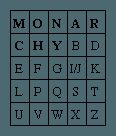
You start with a 5×5 grid. You have 26 letters in the alphabet. You need 25 spots. So, I and J share a cell. You pick a keyword. Let’s use MONARCHY. You write that in first. Then you fill the rest with the remaining letters, alphabetically.
The Playfair cipher reduced the survival of raw frequency distribution by treating digraphs as units.
This isn’t just theory. Lord Peter Wimsey solves a Playfair cipher in Dorothy L. Sayers’s Have His Carcase. It’s a neat trick. But it’s not perfect. Digraphs are correlated. You can still crack it if you have enough text.
So why does this matter today?
Because it shows the evolution of security. We moved from manual grids to algorithms. But the core idea remains the same. Obfuscate the data. Make it hard to read without the key.
The Playfair cipher was a step up. It was harder than a Caesar shift. But it wasn’t unbreakable.
And that’s the thing about old tech. It’s elegant. It’s simple. It’s also flawed.
We don’t use it anymore. We have better tools. But understanding it helps. It shows how we got here. It shows the struggle between secrecy and exposure.
The grid is gone. The keywords are forgotten. But the game continues.

Navigating the Playfair Matrix Rules
Cryptography in the mid-20th century wasn’t just about hiding messages; it was about making them unreadable without a shared key. The Playfair cipher, specifically when using the unique matrix generated by Sayers, relies on a set of rigid geometric rules. To encrypt a message, you don’t look at letters in isolation. You look at them as digraphs —pairs of letters.
Once you break your plaintext into two-letter chunks, finding their encrypted counterparts depends entirely on their position within the 5×5 grid. There are four distinct scenarios.
Different Rows and Columns
This is the most common scenario. If your two letters, say W and E, sit in different rows and different columns, they form the corners of a rectangle. The encryption logic here is straightforward: each letter swaps places to complete the rectangle’s other corners.
W moves to the same row but the column where E sits. E moves to its own column but W’s row. In the Sayers array, W becomes U and E becomes G. The result is UG. It’s a simple swap based on geometry.
Same Row
Things change when the letters share a row. Take A and R. If they sit side-by-side (or anywhere in the same horizontal line), the rule shifts to a cyclic shift. You move one step to the right.
A becomes R. R becomes M, wrapping around to the start of the row if necessary. It’s a shift, not a swap.
Same Column
Vertical alignment triggers a different mechanic. Consider I and S. If they are stacked in the same column, you don’t move right. You move down.
I becomes S. S becomes X, again, with a wrap-around rule if you hit the bottom of the grid. The cipher moves vertically instead of horizontally.
Handling Double Letters and Odd Lengths
The Playfair system has a nasty habit of breaking down when it encounters double letters. You can’t encrypt “MM” as a single digraph. The rule is strict: the pair must be unique.
If you have a word like SUMMER, you can’t group it as SU-MM-ER. Instead, you insert a filler letter, typically Q, between the doubles. The MM becomes MQ and ME. So SUMMER breaks down into SU-MQ-ME-R (with padding, see below).
This is where the Q comes in. It’s a spurious symbol, a placeholder that doesn’t carry semantic weight but ensures the algorithm can process the pair.
Then there’s the length issue. Playfair requires an even number of letters. If your message ends on an odd note, you append an X (or sometimes Q) to the end. It’s a brute-force solution to a structural constraint.
The Result
When you apply these rules to the familiar plaintext example using Sayers’s specific Playfair array, the output is a string of seemingly random letters. But for anyone holding the matrix, the geometry reveals the original message.
The beauty of this system isn’t in its secrecy—it’s in its elegance. A simple grid, four rules, and a lot of positional logic. It turns language into a puzzle where the pieces don’t just fit; they slide.
What happens when the filler letter itself creates a double with the next character?


Why Playfair Ciphers Still Leak Data
You might think that if you bury the frequency distribution deep enough in the encryption process, the output would look like pure noise. A perfect flattening. A histogram with no peaks.
That is not what happens with Playfair.
The ciphertext plot of letter frequencies is not flat. It deviates from that ideal state. That deviation matters. It measures how often certain letter pairs pop up more than others. It also reveals the Playfair’s internal logic—the row-and-column correlation of symbols.
Cryptanalysts exploit this structure. It is the essential weakness.
But here is the nuance. The cipher does obscure a significant part of the plaintext frequency distribution. This makes it harder to crack than a simple monoalphabetic substitution. Not impossible. Just significantly harder.
How Row and Column Correlations Help Crackers
The Playfair cipher works by encrypting digraphs (pairs of letters). It uses a 5×5 grid. The position of letters in that grid dictates the encryption rules.
If two letters are in the same row, they shift right. Same column, shift down. Otherwise, they form a rectangle and swap columns.
This geometric manipulation preserves some statistical traces. The correlation between symbols in the ciphertext is not random. It follows the grid’s geometry. Analysts look for these patterns. They hunt for the residual frequency spikes.
Why does this matter? Because total randomness is rare in human language. If you remove the obvious patterns, you still leave shadows. Playfair’s method shifts the shadows but does not erase them.
Comparing Playfair to Monoalphabetic Systems
A monoalphabetic cipher maps each plaintext letter to a single ciphertext letter. A maps to X. B maps to Y. Frequency analysis is trivial. You count the letters. You match the highest counts to E, T, A. Done.
Playfair complicates this. It does not map single letters. It maps pairs. This changes the frequency landscape.
The loss of single-letter frequency data is significant. It breaks the direct link between plaintext and ciphertext frequencies. You cannot simply count ‘Q’s and guess ‘E’.
However, the digraph frequencies remain. And they are not uniform. Some pairs occur more frequently due to language structure. Playfair’s row/column rules do not randomize these frequencies completely. They distort them. But they remain detectable.
So, is it secure?
Not by modern standards. It was a step up from simple substitution. It bought time. It forced attackers to think in pairs, not singles. But the structure is still there. The deviation from a flat distribution is the tell.
The grid remains. The geometry remains. And as long as geometry remains, patterns can be found.