Laptops and PDAs free us from our desks, but we still need a physical connection. I have to carry the box with me. Researchers at the AT&T Research Institute in Cambridge are trying to change that equation. They are building a ubiquitous network system that separates software from hardware. The app follows you. Not your laptop. The program itself.
Imagine walking into a room. Press the button. The nearest computer immediately becomes your computer. It’s not a local case. This is your *desktop. your file. your settings. Open tabs. This also applies to mobile phones and digital cameras. The hardware is universal. Identity is personal.
The basic idea is simple, but fundamental. Why keep Office in your bag when Office can come to you? We are moving towards intelligent computers that track our movements. Here’s how to put the pieces together To take your knowledge with you.
Search for signal
The system is based on a small radio transmitter that the user carries. Think of it as a beacon. There are many special sensors in the buildings. These sensors communicate with the transmitter. When you enter the room, the network recognizes you. Find the closest available computing device. The device takes over.
This is not magic. This is a coordinated transfer of data and space. “Bat signal” is literal here. Your presence activates the system. Nearby computers will be illuminated with your profile. No need to log in. Just as it is. The computer knows who you are.
“With the push of a button, the closest computer in the room becomes your computer for as long as you need it.”
Why is this important now?
We assume that moving means bearing weight. We value portability over convenience. This model disrupts commerce. You bring nothing but yourself. The infrastructure does the rest. This will reduce confusion. Reduces the risk of losing your device. It also means you won’t lose your job. You are in the changing rooms. Switch devices. The session still exists.
The impact on the data processing of companies and homes is significant. No more sync errors. No more “I left it on another computer” situation. The data is online. The only hardware is the monitor and keyboard. temporary ship.
Puzzle piece
Achieving this goal requires several components to work in harmony. Requires a user-side transmitter. Requires architectural sensors. Background logic is needed to connect users to devices. And the application needs to understand its environment. You need to be able to change your environment without collapsing.
It’s not just about speed. It’s about situational awareness. Your computer knows where you are. It knows who you are. It will be adjusted accordingly. This is the transition from dumb terminals to smart, adaptive interfaces.
We are still in the early stages of this development. But the way is clear. No hardware changes. The software works. The user remains unchanged.
How AT&T’s Ultrasonic Positioning System Really Works
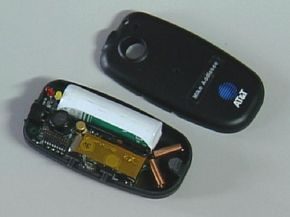
It is inconceivable that a computer knows who is sitting next to it. If a program needs to track a user, the infrastructure needs to find that user and hardware. AT&T researchers solved this problem using a system that sounds like something out of science fiction but is built on basic physics. They call it the ultrasonic location system. It relies on three moving parts: the BAT (user-operated transmitter), a ceiling-mounted receiver, and a central controller that keeps the whole mess in sync.
The user experience starts with using BAT. This little device sends its own 48-bit code. It’s not just about sending data. It also has a transmitter that communicates with the central controller. This is done via a two-way 433 MHz radio link. This setting enables two-way communication. This is needed to check status or send commands.
The device itself is very compact. The bat measures 3 inches long, 1.4 inches wide, and 0.6 inches thick. It’s about the size of an old pager. One 3.6 volt lithium thionyl chloride battery as power source. It does not need to be changed for about half a year. Inside the case there are two buttons, two LEDs, a piezo speaker and a voltage monitor. Speakers turn bats into ubiquitous input/output devices. You can beep. You can light it. It’s more than just a tracker.
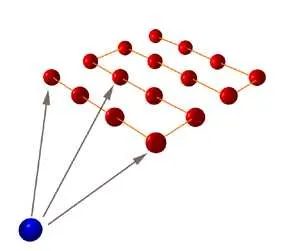
Tracking happens in the ceiling. The receivers are installed in a square grid at a distance of about 1.2 meters from each other. The AT&T Labs building in Cambridge is a 10,000 square foot building with approximately 720 receivers. When the bat emits an ultrasonic signal, it is picked up by the ceiling. The system then uses trilateration to calculate the position. This technique measures the distance of an object relative to three specific reference points. This is simple geometry. The signal reaches several receivers. The time delay between hits determines the distance. Three points give you a location.
Why this is important for everyday tracking
Most people think that GPS is the only way to know where someone is. This only applies outdoors. Indoors, the GPS signal can be reflected off the walls or be completely blocked. It does not penetrate concrete well. Different signals are needed. Ultrasound works. It actually increases security because it doesn’t penetrate walls. You can’t track anyone through the door. The signal remains indoors.
This is important because it changes the way we interact with spaces. Bats are more than just passive trackers. It’s an input device. You can press the button. The building knows you’re pushing. The central controller receives this signal via a 433 MHz link. Your location information will be updated. Lighting may change. The temperature is adjustable. Or maybe it just records your presence in the room for security reasons. Piezoelectric speakers enable backhaul connection inside buildings. A beep indicates that the system has accepted the command. If you hear two beeps, an error may have occurred. It’s a feedback loop.
The most important factor here is battery life. Half a year is enough time to forget. You don’t need to charge it weekly. This reduces maintenance. If you had to charge
Bat tracking
When the system knows which bat is active, the central surveillanceler sends the unique ID of that bat over the radio link. Bats receive the signal and respond by sending ultrasonic pulses. The receiving network captures the ping. The surveillanceler times the flight.
Sound travels through air at a known speed. By measuring the time it takes for the pulse to reach three separate sensors, the system is able to triangulate the exact location of the bat. The resulting positional accuracy is 3 cm (1.18 inches). This applies to the entire Cambridge complex.
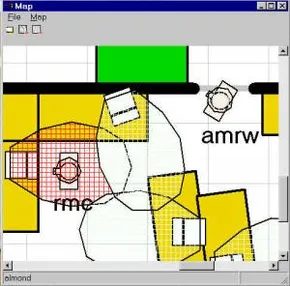
It’s not enough to know where the bats are. This system determines direction by observing two or more bats. By analyzing receiver patterns, it calculates the way a person is facing. The signal strength is also taken into account.
Why this matters
Most people don’t think about how their devices know their location. GPS does not work indoors. Wi-Fi is confusing. This ultrasound system fills that gap.
Bats are effective because they are small. It fits perfectly in your pocket or bag. No manual activation required. Users do not need to press any buttons. The system just listens.
This changes the how spaces work. The office can detect if the meeting room is empty. In retail, you can see which aisles people ignore. Health care providers can track equipment. Accuracy is important because an accuracy of 3 centimeters is enough to distinguish two people standing next to each other.
How do they compare?
Other indoor monitoring methods have disadvantages. The accuracy of Bluetooth beacons is up to a few meters. This is useful for large areas. It is not useful for precise navigation.
Ultrasound pulses travel very quickly. Doesn’t penetrate walls very well. This is a feature, not a bug. Prevents signal leakage to nearby offices. keeps the data local.
This system is based on fixed sensors. Can be installed on the ceiling or wall. they don’t move. Bats cost very little. Easy to change. If the battery runs out, you can replace the tag. There is no need to reconfigure the entire network.
The Catch
No system is perfect. Ultrasound signals can be blocked. A thick jacket can weaken the signal. Metal shelves can cause reflections. Controllers must take noise into account. Eliminate false positives.
Cambridge building is a testament to this concept. This shows that high accuracy can be achieved without expensive equipment. Bats are cheap. The receiver is standard equipment. The software does the heavy lifting for you.
As buildings become smarter, this accuracy becomes even more important. Stop asking, “Where are my keys?” And then you start asking, “How can this space help me?” The technology already exists. We’re just waiting for the right use case.
Does it feel invasive? perhaps. But it is also useful. The line between convenience and surveillance is thin. we are walking
This is not science fiction anymore. This is how the office works now.
you enter the room. I see the phone sitting on a clean table. you don’t touch it. No need to make a phone call. The phone is now yours.
Calls to personal devices are made immediately from the respective desk phone.
But here’s the problem. What if someone else is already using the phone? You get nothing. The central controller recognizes the conflict. The phone remains in the hands of the current owner. You cannot hijack a busy line.
This is not magic. This is geometry.
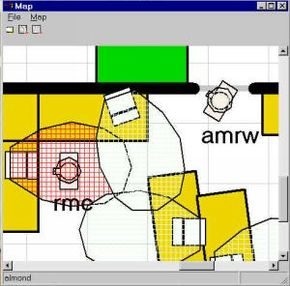
This system builds a digital bubble around each and every object. Think of it as a map of the universe. Ownership is transferred when the bubble touches the device bubble. This is temporary. It is dynamic. This is automatic.
Cameras don’t just record. they looked. Go into the conference room and you’ll find a camera. Tilt the lens. You can walk around the room. You are always in the picture. No more messy static shots.
Next is the desktop.
Introducing Virtual Network Computing (VNC).
This changes everything. The computer screen is not on the table. It’s in your pocket. Or rather, it is attached to an identifier in system memory.
Approach the building’s monitor. Any monitor.
The desktop will appear.
Teleport. immediately.
Do you want to show your work to a colleague? Walk up to their table. Your screen is there. They see what you see. I don’t have a USB drive. There are no email attachments. There is no “let’s save this first”. Clean instant access.
Do you want to leave the room? The remote control screen turns black. Your desk is waiting for you. As follows.
Information funnel and smart poster
This is where it gets weird.
Remember those sticky notes you once left on your screen? Or maybe those flyers on your break room wall?
Gone.
Go to Information Hopper.
These are not just digital signs. They have situational awareness.
Lobby posters do not show the same advertisement to everyone. It examines your credentials. I see you are from the marketing department. Shows effective assets from the third quarter.
Is there a kiosk in the lobby? This is an information channel.
Click on the character. Or just walk there. The screen wakes up. It knows who you are. it knows what you need.
Do you want to see the organizational chart of your company? It’s there.
Do you need a meeting room? Your phone is routed to the local display on the mapped floor.
This is not just for convenience. It’s all about chaos.
Physical flyers rot. Digital signs are static. Hopper flows.
Updated in real time.
If you cancel, the display changes immediately. No one has to tear down the poster. There is no need to print new paper.
What about the smart poster in the hallway? It does more than just display content. they interact.
Did you see the QR code? No, that’s the old fashioned way.
Posters “push” information to devices based on distance.
A smart poster for walking in an engineering lab. The phone rings. A link to the latest server logs will appear in your inbox.
Have you ever walked past the HR department? i understand that.
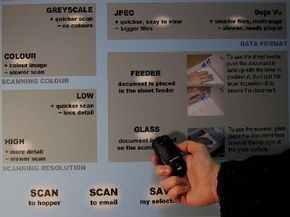
Information hopper and smart poster
When the location area is locked, the network becomes more than just a data pipe and becomes a context-aware system. The first big change was the introduction of information hopper. Think of this as a data timeline that tracks exactly when the data was created. It’s not just about saving files. Record who did it. Save where you are. It also tracks who you’re with.
This changes the way you view your computer’s file system. The hopper acts like a ubiquitous filing clerk, always observing and classifying. When you connect your digital camera online, your photos are instantly on your personal timeline. When you create voice notes with Voice Recorder, they are recorded in the same stream. If two pieces of data were created at the exact same time, they will appear next to each other on the timeline. The system understands the social context of that moment. It links your timeline with those of your colleagues. This allows you to create project-specific timelines for related threads without manual tagging.
Then there are smart posters. We are used to clicking buttons on the screen. The system moves these buttons to physical space. A smart poster is a simple piece of paper that is placed on the wall. Identifies where files are sent based on user settings. You can also start showing ads. A touch screen is not required for use. hold your bat near the paper button and click. Your identity will be recognized immediately. These posters can have multiple buttons, each with a different function.
This ultrasonic positioning system will force you to rethink file storage. Traditionally, we store our files locally on our work computers and sometimes back them up on servers. Thanks to a building-wide network, computers can now transfer ownership of files. All data is transferred to a centralized timeline that can be accessed from any device in the structure.
Frequently asked questions
What are some common examples of ubiquitous computing?
Common examples include voice assistants such as Amazon Alexa and Google Assistant. Smartphones are a good example. Wearable devices such as smart watches and fitness trackers are also important. Smart home devices such as thermostats and surveillance cameras fit this model. Vehicle infotainment systems are another important area. Office productivity tools like Slack and Zoom support this type of workflow that can be accessed from anywhere.
What is a ubiquitous system?
A ubiquitous system is one that exists everywhere. It runs in the background, so you don’t have to pay any attention to it.
Why is the Internet called the ubiquitous network?
The Internet is called “ubiquitous” because it is available anytime and anywhere. This is a network that is always online and available.
Other resources
For more information, check out the links below.
- How the home network works
- How augmented reality works
- How things work
From an academic and business perspective:
-AT&T Cambridge Research Institute: Sentient Computing Project
– Technology overview: Information technology is everywhere
– University of Cambridge: Sentient Computing
– AT&T: Programming with space