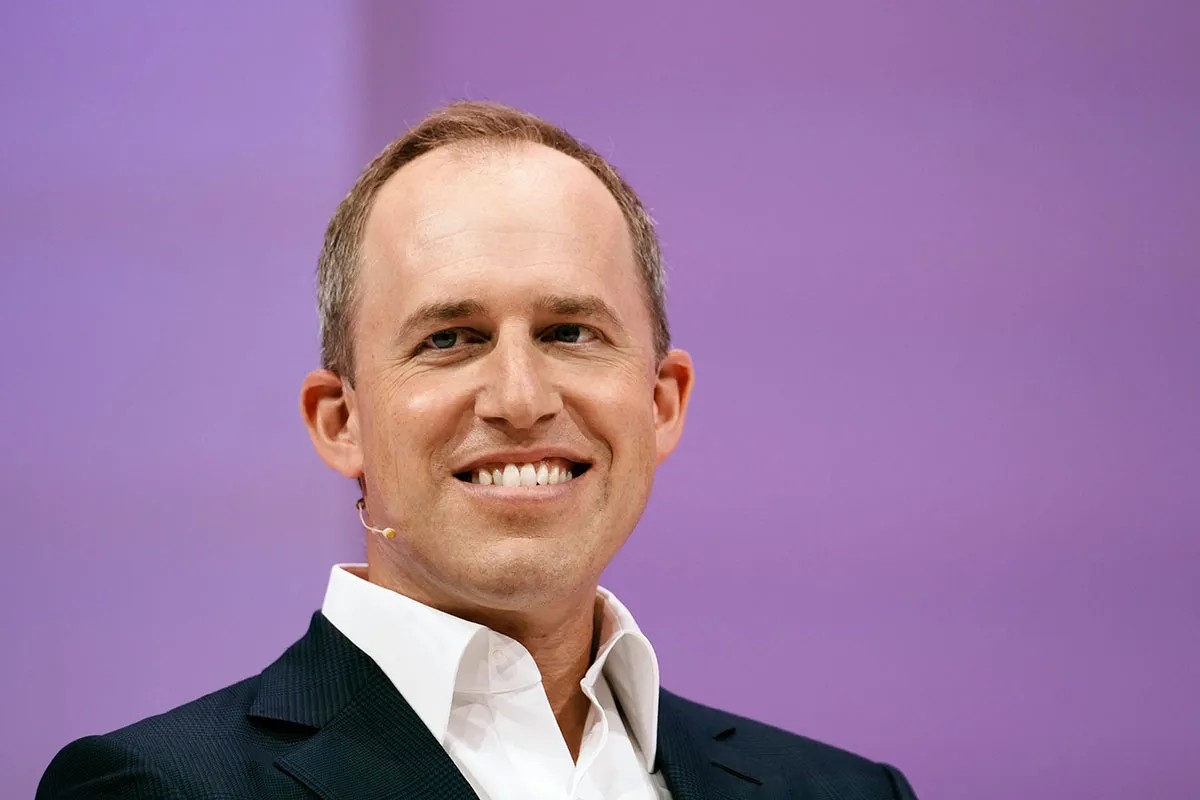
The era of navigating complex menus and clicking through endless buttons may be coming to an end. Bret Taylor, co-founder and CEO of the AI startup Sierra, predicts a fundamental shift in how humans interact with technology: moving away from traditional software interfaces toward a world driven entirely by natural language.
The Shift from Interfaces to Intent
For decades, using software has required a learning curve. Users must learn where specific buttons are located, how menus are structured, and how to navigate rigid workflows. Taylor, the former co-CEO of Salesforce, argues that this model is increasingly inefficient for modern enterprises.
Using platforms like Workday as an example, Taylor notes that most employees only interact with certain software during specific, infrequent events—such as onboarding or annual benefits enrollment. Learning a complex interface for a task performed once a year is a poor use of time.
Instead, Sierra is betting on a future where users simply describe what they need in plain English. Rather than navigating a dashboard, a user would provide a prompt, and an AI agent would execute the task autonomously.
“Agent as a Service”: The Rise of Ghostwriter
To realize this vision, Sierra recently launched Ghostwriter, a specialized tool designed to build other AI agents. This represents a move toward “agent as a service,” where the goal is not to provide a software tool, but to provide a finished solution.
Key features of this approach include:
– Rapid Deployment: Sierra claims it can deploy specialized agents at “unparalleled speeds.” For instance, the company implemented an agent for the retailer Nordstrom in just four weeks.
– Problem-Solving Focus: Taylor emphasizes that “most companies don’t want to make software; they want solutions to their problems.”
– Autonomous Creation: Ghostwriter allows users to prompt the creation of a new, specialized agent to handle specific business tasks without manual coding.
Rapid Growth and High Stakes
Sierra’s trajectory is a testament to the massive investor interest in the “AI agent” sector. The company has achieved remarkable scale in a very short window:
– Revenue: Reached a $100 million annual revenue run rate (ARR) less than 21 months after founding.
– Valuation: Last valued at $10 billion following a $350 million funding round led by Greenoaks Capital.
The Reality Gap: Human Oversight Still Required
While the vision of fully autonomous software is compelling, industry experts suggest we are not quite there yet. Despite the promise of “autonomous” agents, the current reality involves significant human intervention.
Technologists and investors point out that companies like Sierra and legal-AI startup Harvey still rely heavily on “forward-deployed” engineers. These specialists are required to constantly monitor, update, and fine-tune agents to ensure they remain accurate and reliable. This suggests that while the interface may become conversational, the infrastructure behind it still requires intensive human management to prevent errors.
“Most companies don’t want to make software; they want solutions to their problems.”
Conclusion
Sierra is leading a push to replace traditional, click-based software with conversational AI agents that solve problems directly through natural language. However, while the vision of seamless automation is clear, the current industry standard still relies heavily on human engineers to ensure these agents function correctly.