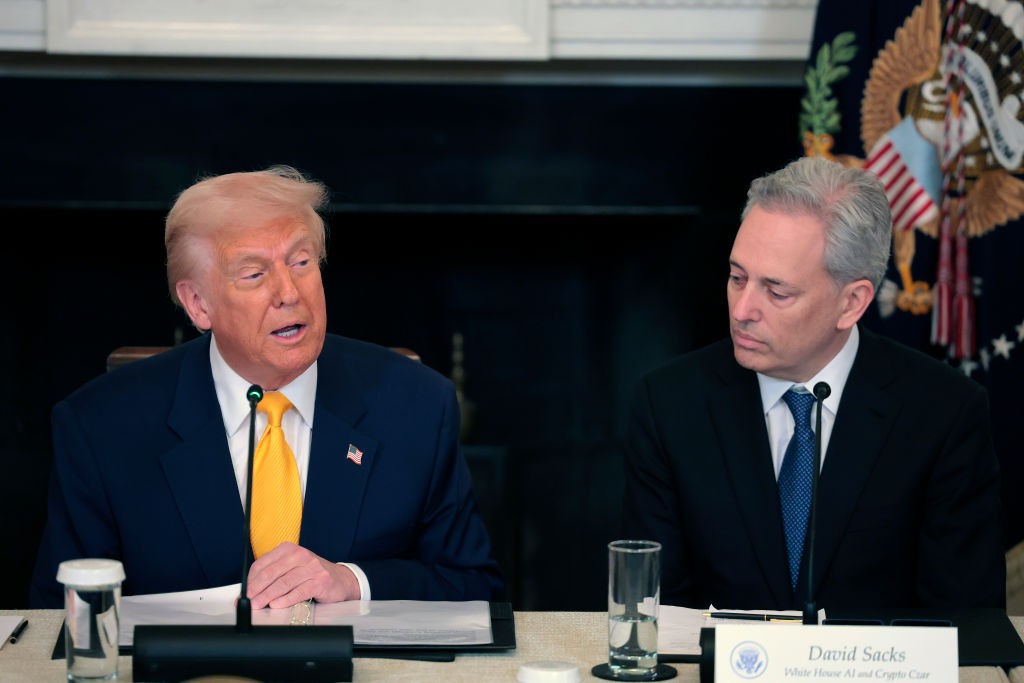
David Sacks, a prominent entrepreneur and investor, has concluded his role as Donald Trump’s special advisor on AI and cryptocurrency policy. He will now co-chair the President’s Council of Advisors on Science and Technology (PCAST), alongside Michael Kratsios, a senior White House technology advisor.
Sacks stated in a Bloomberg interview that his 130-day stint as an AI czar is over, but his influence will continue through PCAST. However, this transition represents a shift in power dynamics. As AI czar, Sacks had direct access to the President and a significant role in shaping policy. PCAST, while influential, is an advisory body that produces reports and recommendations, lacking direct policy-making authority.
A Star-Studded Council
The new PCAST lineup includes tech industry giants such as Nvidia’s Jensen Huang, Meta’s Mark Zuckerberg, Oracle’s Larry Ellison, Google co-founder Sergey Brin, Marc Andreessen, AMD’s Lisa Su, and Michael Dell. Sacks himself noted the council’s unprecedented concentration of high-profile figures.
The council’s agenda will cover AI, advanced semiconductors, quantum computing, and nuclear power. A key focus will be on implementing Trump’s recently released national AI framework, aiming to standardize regulations across states. Sacks highlighted the current fragmented regulatory landscape, with 50 states implementing their own AI rules, creating compliance challenges for innovators.
Timing and Controversies
The timing of Sacks’s transition coincides with scrutiny over his recent public comments on foreign policy. On the “All In” podcast, he advocated for a diplomatic exit from the U.S.-backed conflict with Iran, outlining potential escalations including attacks on critical infrastructure and nuclear use. Trump later stated that Sacks had not discussed these views with him directly. Sacks dismissed the podcast comments as his personal opinion, separate from his official role.
PCAST’s Historical Influence
Historically, PCAST’s impact has varied significantly across administrations. The Obama administration saw the most productive iteration, issuing 36 reports, two of which led to concrete policy changes, like opening the market for over-the-counter hearing aids. Trump’s first-term council was slow to organize and made minimal impact, while Biden’s was heavily academic and produced modest results.
This new PCAST stands apart by being composed almost entirely of executives from the technology companies it will advise on, which could create new dynamics in how these recommendations are implemented.
The effectiveness of this advisory body remains to be seen, but its composition suggests a strong industry-driven approach to future technology policy.
Ultimately, while Sacks’s direct policy influence has diminished, his position within PCAST ensures continued engagement in shaping the administration’s technology agenda.