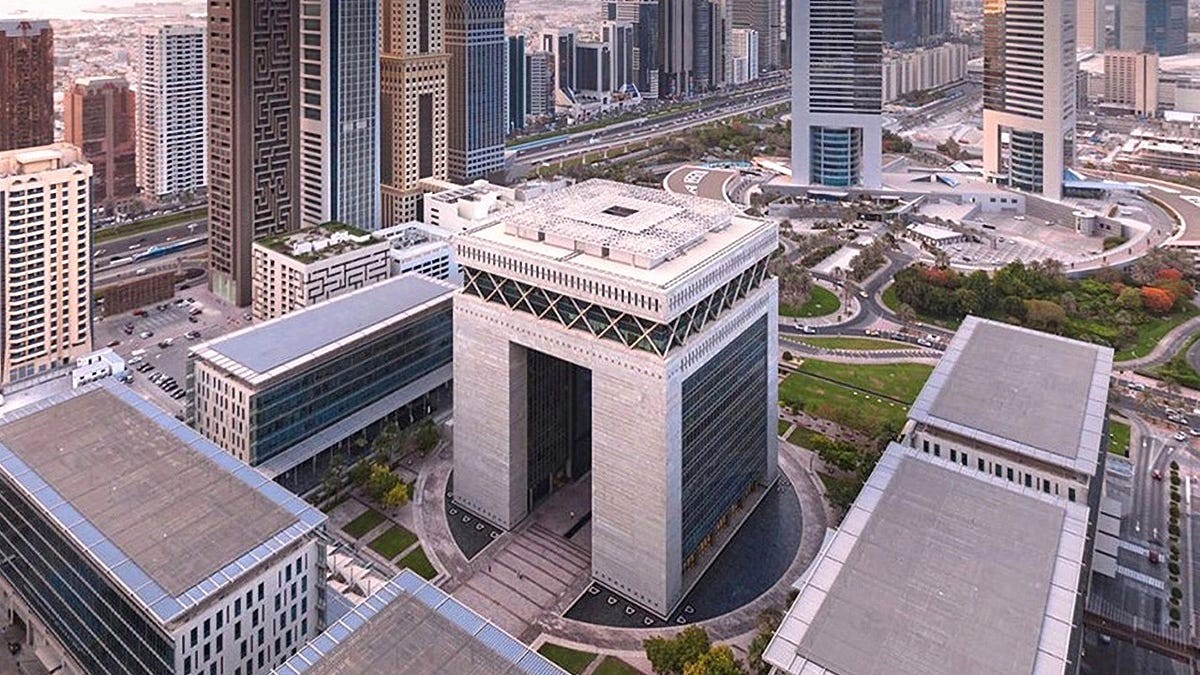
The Dubai International Financial Centre (DIFC) has announced a landmark initiative to transform itself into the world’s first AI-native financial hub. Unlike traditional financial centers that treat artificial intelligence as a peripheral tool to optimize existing workflows, the DIFC aims to embed AI into its very foundation—spanning legal frameworks, regulatory systems, physical infrastructure, and human talent development.
This structural overhaul is expected to generate $3.5 billion (AED 12.9 billion) in economic value and create 25,000 new jobs, serving as a cornerstone of the Dubai Economic Agenda (D33).
A Structural Shift: Beyond “AI Pilots”
Most global financial hubs are currently in the “pilot phase,” testing AI to enhance specific tasks like data entry or customer service. The DIFC is moving toward a different paradigm: integrating AI into the jurisdictional operating model.
This means the center is building a regulatory and legal environment specifically designed for the next generation of finance. Key pillars of this transformation include:
- Advanced Governance: Establishing ethics and legal frameworks that govern not just human-led AI, but autonomous AI agents and robotics.
- The AI Campus: Creating a “full-stack” ecosystem that provides firms with a single location for regulation, specialized training, high-performance computing, and physical infrastructure.
- Smart Urban Integration: By 2030, the DIFC district is projected to function as an “AI-native city-district,” featuring intelligent buildings, autonomous mobility, service robotics, and digital twins to manage utilities and security.
Driving Economic and Technological Growth
The initiative is designed to position the DIFC as the premier global destination for AI-driven finance. The center has set ambitious targets to outperform the top ten global financial hubs in startup density, venture capital funding, and the creation of “unicorns” (startups valued at over $1 billion).
Furthermore, the DIFC intends to export its specialized AI governance software and highly trained talent to the Global South, expanding its influence beyond the Middle East, Africa, and South Asia.
The Context: A Rapidly Accelerating Trend
This announcement follows a period of explosive growth in AI adoption within the region. According to a June 2025 survey by the Dubai Financial Services Authority (DFSA), AI usage among authorized firms has surged:
- Adoption Rates: Increased from 33% in 2024 to 52% in 2025.
- Active Users: The number of firms actively utilizing AI nearly doubled in just one year (from 177 to 345).
- Generative AI: Adoption of generative AI specifically saw a 166% year-on-year increase.
This data suggests that the DIFC’s move is not a speculative gamble, but a proactive response to a massive, existing shift in how financial institutions operate.
Looking Ahead: The Dubai AI Festival
To solidify its role as a global leader, the DIFC will host the Dubai AI Festival on October 26–27, 2026, at the Dubai World Trade Centre. The event is expected to attract over 20,000 participants from more than 100 countries, serving as a global stage for the future of AI in financial services.
Conclusion
By moving from incremental AI adoption to a fully integrated “AI-native” model, the DIFC is attempting to redefine the role of a financial jurisdiction in the age of autonomy. If successful, this shift will create a new global benchmark for how regulation, technology, and urban infrastructure converge to drive economic value.