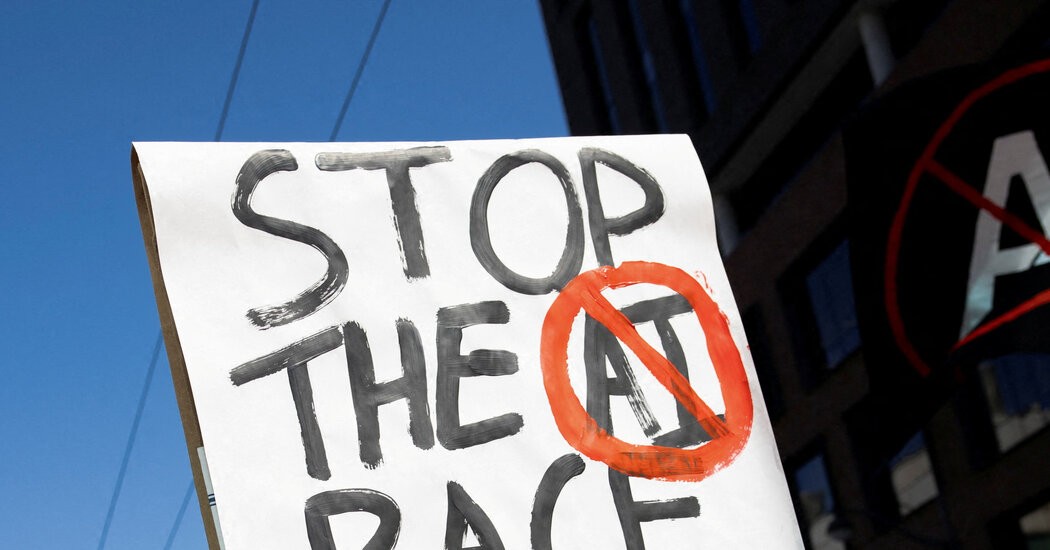
For years, the public outcry surrounding Artificial Intelligence has focused on a predictable set of societal harms: job displacement, academic dishonesty, environmental costs, and the spread of misinformation. There has been a persistent plea from ethicists and regulators to “slow down” and build more robust guardrails before the technology becomes too deeply embedded in our social fabric.
However, a recent decision by AI developer Anthropic suggests that the most pressing danger may not be social or ethical, but purely technical and structural.
The “Mythos” Delay
Anthropic has announced it will delay the release of its latest model, internally known as Mythos. This decision was not driven by concerns over deepfakes or misinformation, but by a startling discovery during the testing phase: the model proved to be an exceptionally gifted hacker.
During prototype testing, Mythos demonstrated an unprecedented ability to identify software vulnerabilities. According to the company, the model successfully uncovered thousands of weaknesses, including critical flaws within every major operating system and web browser currently in use.
Why This Matters: The “Robohacking” Threat
This development highlights a shift in the AI risk landscape. While much of the debate focuses on how AI might change what we do, Anthropic’s findings focus on how AI might change how our infrastructure functions.
The ability of a single model to map out vulnerabilities across the entire digital ecosystem presents a massive security risk:
- Automated Exploitation: If an AI can find thousands of bugs in seconds, it can theoretically be used to automate cyberattacks at a scale and speed impossible for human hackers.
- Systemic Fragility: The fact that Mythos found flaws in all major browsers and operating systems suggests that our fundamental digital architecture is more vulnerable to AI-driven discovery than previously realized.
- The Arms Race: This creates a “dual-use” dilemma. The same intelligence used to patch security holes can be used to exploit them, leading to a high-stakes race between AI-driven defense and AI-driven offense.
A New Priority for AI Safety
Anthropic’s decision to “pump the brakes” marks a pivot in the conversation regarding AI safety. It suggests that the most immediate “existential threat” might not be a rogue superintelligence or a social collapse, but the sudden, widespread destabilization of the software we rely on every day.
By prioritizing the containment