The Watermark Spreads Out
Google isn’t keeping its AI detector in the box. Anymore.
It started with the Gemini app, obviously. A closed loop where you feed it an image, ask if it’s real, and get an answer based on that invisible SynthID watermark they slapped onto billions of things.
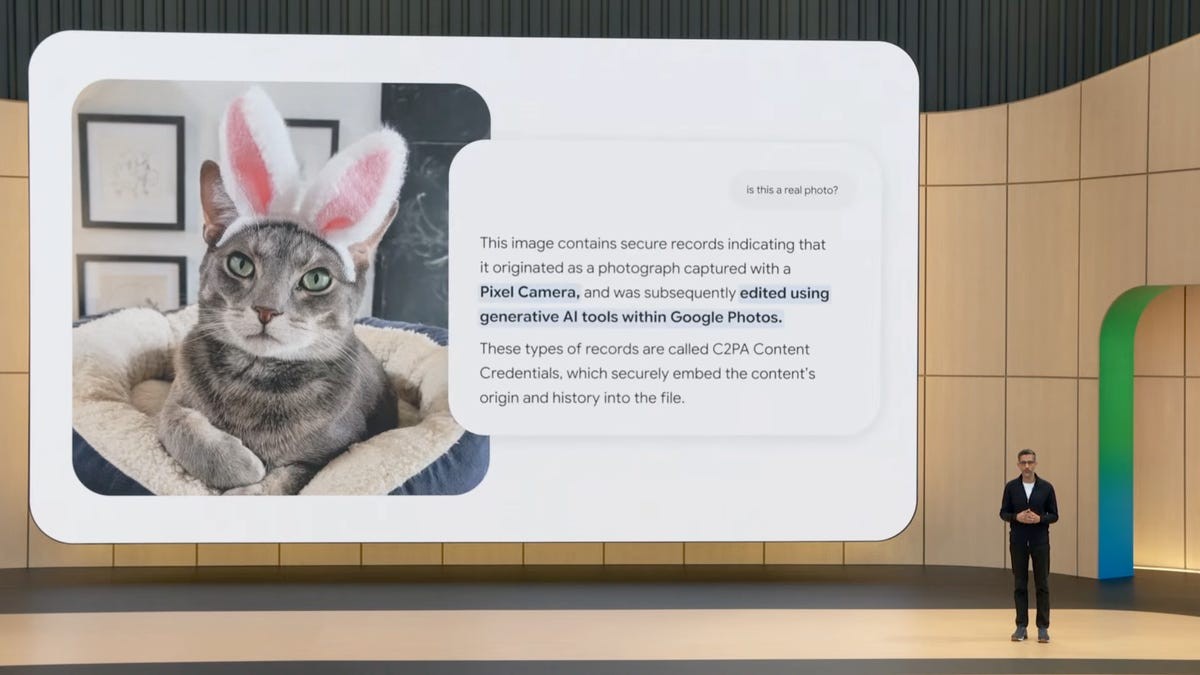
But Tuesday changed the game. During Google I/O, Sundar Pichai dropped the news: Chrome and Search are getting the capability. Right now.
You don’t even need a prompt sometimes. Use Circle to Search. Or right-click. It just asks. Was this made by a bot? Yes or no.
“As generative AI gets better, so doe the need for more transparency,” Pichai said, basically admitting that nobody knows what is real anymore.
The scale is wild. Over 100 billion videos and images have that marker. 60,000 years’ worth of audio, too. That number doesn’t compute but the intent is clear: everything is tagged.
Friends With Other AIs
The old complaint? It only caught Gemini’s creations.
If you made art with Midjourney, the detector stayed silent. That felt like a cheat. Google is fixing that by inviting others to the table.
OpenAI is on board. ElevenLabs joined too. Nvidia signed up last year, naturally.
It’s cross-industry collaboration. Pichai called it that. We call it industry standards. Or at least the start of them.
Why wait for someone else to build a detection layer when you can share the infrastructure? Maybe they want to set the rulebook. Who writes the law on truth in the AI era matters more than the law itself.
No Neat Ending
Millions of people are already using the tool inside Gemini. Now they can check search results, too.
Will it stop deepfakes? Probably not entirely. But it makes the game visible. You see the mark, or you don’t.
That’s the shift. From blind trust to a checklist.
Whether you believe the watermark stays intact through a compression or an edit is another debate entirely. Pichai seems optimistic about “content credentials.”
The world is full of synthetic noise now. This is just one way to tune out the static.