Google has released Lyria 3, its latest artificial intelligence model capable of generating original music tracks. Available now within the Gemini desktop app (with mobile access coming soon), Lyria 3 allows users to create high-fidelity, 30-second audio clips in various genres – from simple jingles to more complex compositions – all for free.
How Lyria 3 Works
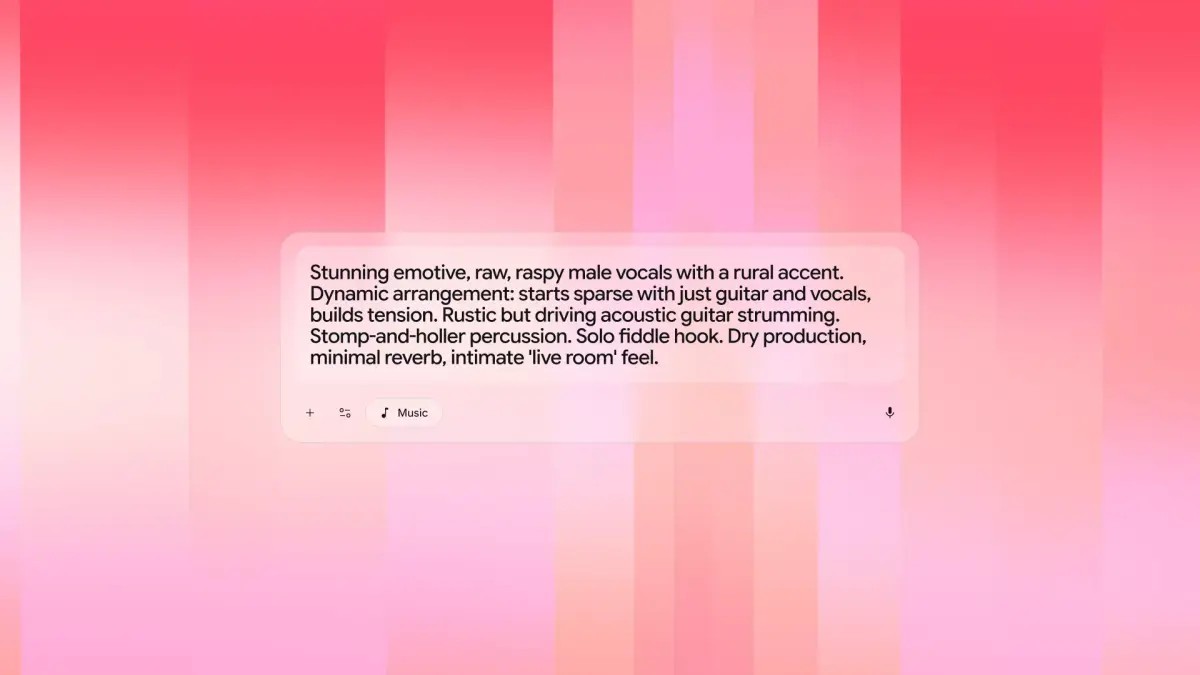
The tool operates on text, image, audio, or video prompts, enabling users to dictate the desired style, vocals, and tempo. Notably, Lyria 3 can now generate lyrics independently, eliminating the need for user-provided text. The model also offers a template option with dynamic suggestions for users seeking creative inspiration. Google has embedded a SynthID watermark on all generated tracks to clearly identify them as AI-created content.
Accessibility and Usage Limits
Lyria 3 is free for all users aged 18 and up, supporting English, German, Spanish, French, Hindi, Japanese, Korean, and Portuguese. Google plans to expand language support in the future. While free access is available, subscribers to Google AI Plus and AI Ultra will receive higher usage limits.
The Copyright Debate
The launch of Lyria 3 arrives amid ongoing scrutiny of AI-generated content and copyright law. The AI industry has faced criticism for training models on copyrighted music without permission or compensation, leading to legal challenges. Google asserts that it trained Lyria 3 “mindfully” with copyright and partner agreements in mind, but the broader debate remains unresolved. The company states that the model is designed for original expression rather than artist mimicry, and provides a reporting mechanism for potential copyright violations.
Legal Context
This move comes at a time when major tech companies are facing lawsuits over the use of copyrighted material in AI training. Notably, Ziff Davis, Mashable’s parent company, filed a lawsuit against OpenAI in April 2025 alleging copyright infringement. The legal landscape surrounding AI music generation remains uncertain, but Google is positioning Lyria 3 as a tool for original creation within those boundaries.
In essence, Lyria 3 represents a significant step toward democratizing music creation through AI, but its impact will depend on the ongoing legal and ethical considerations surrounding copyright and intellectual property.