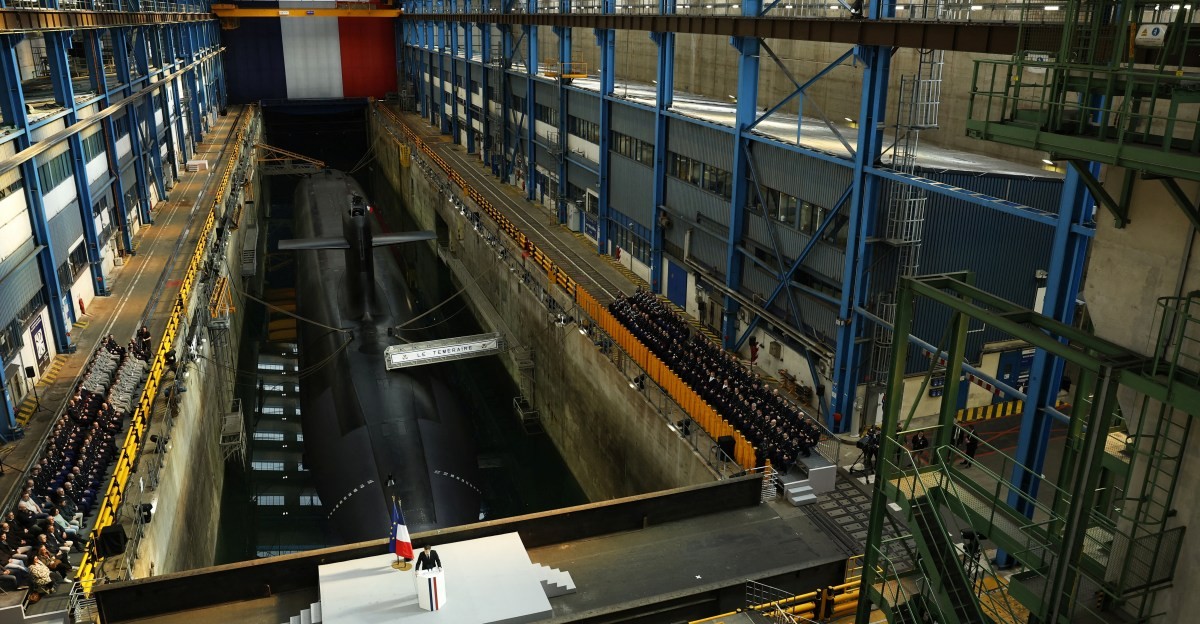
The recent escalation in Iran, coupled with France’s decision to expand its nuclear arsenal, signals a dangerous shift in global security. While seemingly disparate events, they reflect a growing consensus: nuclear weapons are regaining their appeal as a deterrent in a world where traditional alliances are fracturing and military interventions are increasingly arbitrary.
The Iran Precedent: Deterrence by Force
The ongoing conflict in Iran demonstrates a stark lesson. Two nuclear powers, the United States and Israel, have effectively neutralized the defenses of a nation that pursued nuclear enrichment without fully weaponizing. This has implications beyond the Middle East. The fact that this military action occurred during negotiations with Iran, and threatens the regime’s survival, is not lost on other nations.
For years, Iran maintained a “threshold” nuclear state, enriching uranium without crossing the line into full-scale weaponization. This strategy aimed to extract concessions through threat without incurring the diplomatic costs of actual proliferation. However, it proved disastrous: sanctions crippled the economy, and its conventional military defenses failed to deter decisive intervention.
This outcome suggests that half-measures are insufficient. Nations must either fully commit to nuclear deterrence or face the consequences of vulnerability.
North Korea’s Counterexample: The Value of Completion
While Iran’s fate is unfolding, North Korea stands as a stark contrast. Despite decades of sanctions and threats, Pyongyang has not only maintained its nuclear arsenal (estimated at around 50 warheads) but also enjoys de facto acceptance from the international community.
The Kim regime learned from the fates of Libya and Iraq, which relinquished their nuclear programs only to be overthrown. North Korea’s complete development of nuclear capabilities has ensured its survival, even under extreme pressure. As one analyst noted, “Pyongyang and Tehran will present two parables for the next proliferator; it seems pretty clear which approach has more appeal.”
France’s Nuclear Re-Arming: Allies Seeking Independence
France’s decision to expand its nuclear arsenal, announced by President Macron, is another sign of the changing landscape. Macron cited a need for European independence from unreliable security guarantees, particularly from the United States.
This move comes after years of growing skepticism among European nations regarding US commitments. Trump’s threats to withdraw from NATO, his attempted seizure of Greenland from Denmark, and his recent attacks on allies refusing to support military interventions have eroded trust.
France’s actions may inspire other European countries, such as Poland, to pursue their own nuclear capabilities. Macron’s speech effectively signaled that Europe can no longer rely solely on the US nuclear umbrella.
The Erosion of Arms Control: A New Nuclear Era
The collapse of the last US-Russia arms control agreement further accelerates this trend. With China rapidly expanding its arsenal, and the US abandoning decades-old treaties, the world is entering a new nuclear era. Nuclear threats are becoming normalized as coercion tactics, as seen in Putin’s rhetoric during the Ukraine conflict.
The US has historically sought to prevent proliferation, even among allies like South Korea and Taiwan. However, current US foreign policy may inadvertently encourage more nations to pursue nuclear weapons. Public opinion in countries facing perceived threats is shifting. For example, 74% of South Koreans now favor developing their own nuclear weapons.
The proliferation of nuclear weapons increases the risk of either deliberate or accidental use. The more actors involved, the higher the probability of miscalculation or escalation. The world is hurtling toward a more unstable future, where the ultimate deterrent may be the only guarantee of survival.