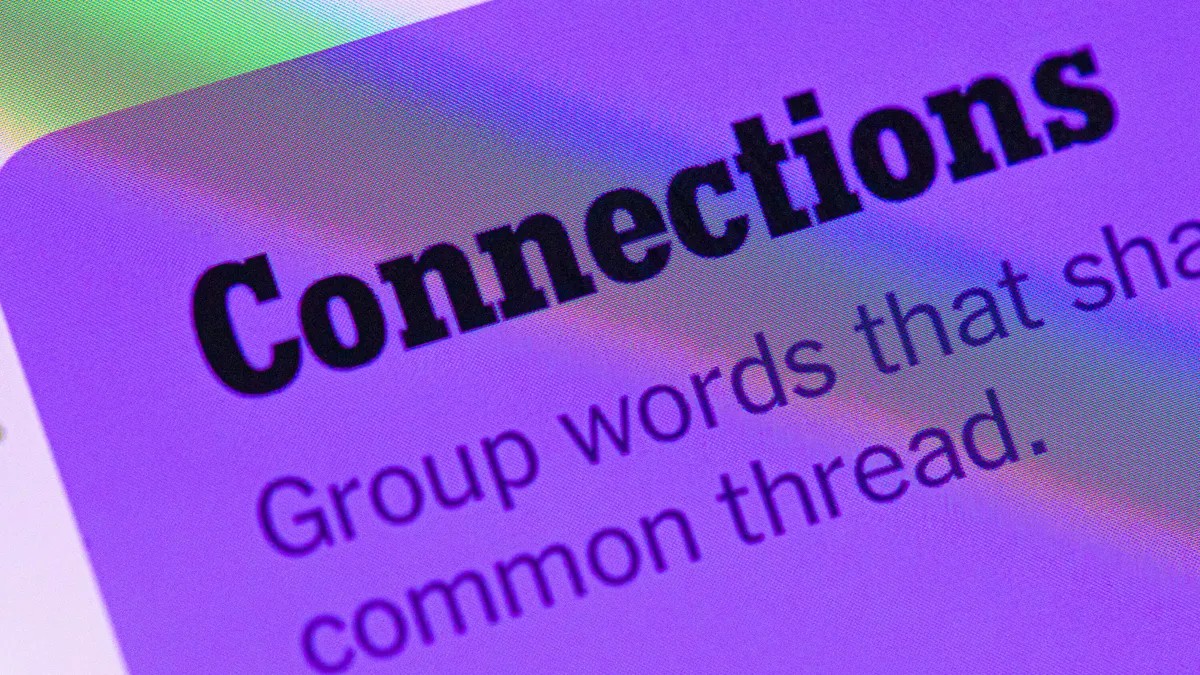
The New York Times daily Connections puzzle challenges players to find groupings among sixteen seemingly random words. Today’s edition (#894) features clues ranging from fashion accessories to animated characters. If you’re stuck, this guide provides hints and the complete solutions, plus tips to improve your solving strategy.
Today’s Hints
The puzzle is broken into four color-coded groups with increasing difficulty. Here are hints, from easiest (Yellow) to hardest (Purple):
- Yellow: Think accessories people pin to their clothing.
- Green: These are alcoholic beverages.
- Blue: Characters from a well-known animation studio.
- Purple: This grouping is based on words that start with synonyms for the act of consuming food.
The Solutions
Here’s the breakdown of each group and its correct answers:
- Yellow: The connection is things worn on lapels. The answers are awareness ribbon, boutonnière, lapel pin, and lavalier.
- Green: The theme is cocktails. The correct words are cosmopolitan, greyhound, screwdriver, and sea breeze.
- Blue: These are protagonists from Pixar films: clownfish (Finding Nemo), grumpy old man (Up), racecar (Cars), and talking doll (Toy Story).
- Purple: The connection is words that start with synonyms for “eat.” The answers are bolt cutter, chow mein, scarf ring, and wolf eel.
Pro Tips for Success
The Times now offers a Connections Bot, allowing players to track their performance and analyze their solves. Beyond statistics, these strategies can help you conquer the puzzle:
- Read Aloud: Saying the words out loud can reveal unexpected connections. The puzzle creators often use phrases where words are used in similar contexts.
- Avoid Assumptions: The editors intentionally mislead. Don’t assume obvious connections are correct. If you’re stuck, the shuffle button provides a fresh perspective.
- Deconstruct Compounds: Break down multi-word answers to find hidden patterns. Past puzzles have used obscure connections, such as words that begin with the names of rock bands.
Ultimately, the NYT Connections puzzle is designed to challenge and entertain. By using these hints, answers, and strategies, you’ll increase your success rate and enjoy the mental workout.