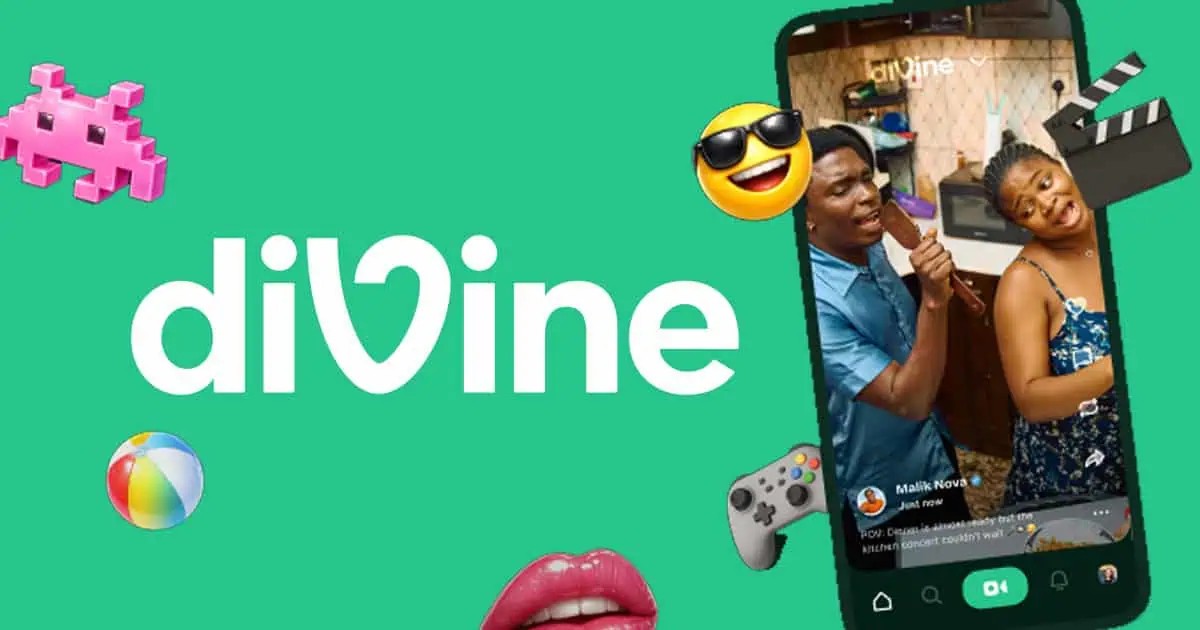
The era of short-form, looping video is making a comeback. Divine, a new social media platform designed to resurrect the spirit of the defunct Vine, has officially launched on the App Store and Google Play. More than just a nostalgia trip, the project aims to redefine social media through open-source protocols and a strict rejection of AI-generated content.
A Resurrection Fueled by Redress
The project is funded by “and Other Stuff,” a nonprofit established in May 2025 by Twitter co-founder Jack Dorsey. Unlike traditional venture capital, Dorsey’s involvement is not driven by a search for financial returns. Instead, it appears to be an attempt at “digital reparations”—an effort to correct his decision to shut down Vine during his tenure as CEO of Twitter.
The technical heavy lifting is led by Evan Henshaw-Plath (known online as “Rabble”), a former Twitter employee. Reconstructing the Vine archive was a massive data challenge. The team had to work with massive, 40-50 GB binary files preserved by the community-led Archive Team. Through custom big-data scripts, the team successfully restored:
– Roughly 500,000 videos.
– Engagement metrics such as views, likes, and comments.
– Content from nearly 100,000 original creators.
Fighting “AI Slop” with Human Content
One of the most significant distinctions between Divine and modern giants like TikTok or Instagram is its stance on artificial intelligence. In an era where social feeds are increasingly crowded with “AI slop”—low-effort, algorithmically generated content—Divine is positioning itself as a sanctuary for human creativity.
To enforce this, the platform uses two primary methods:
1. In-app recording: Users are encouraged to film directly within the app.
2. C2PA Verification: For uploaded videos, Divine utilizes the C2PA open standard, which tracks the digital provenance and edit history of a file to ensure its authenticity.
“I don’t like the idea that tons of content can be made very quickly and with little humanity or thought,” says Henshaw-Plath.
Built on Open Protocols
Divine is not trying to build a “walled garden” like Meta or X. Instead, it is built on Nostr, an open social protocol. The developers are also exploring integrations with:
– AT Protocol: The technology powering Bluesky.
– ActivityPub: The protocol behind Mastodon and Meta’s Threads.
By leveraging these open standards, Divine aims to move social media away from the control of centralized tech giants and toward a decentralized, user-owned ecosystem.
Features and Monetization
The app includes a “Compilation Mode,” designed to cater to a generation that grew up consuming rapid-fire video streams. Users can browse hashtags (e.g., #cats) and enjoy an autoplaying stream of classic and new Vines, or pause to interact with the content.
Because Divine is structured as a public benefit corporation with no traditional revenue model, it avoids the data-harvesting traps of most social platforms. Instead, the team is looking at creator-centric models:
– Direct support: Similar to Patreon.
– Brand collaborations: Allowing creators to monetize through traditional deals.
– Pro accounts: Offering advanced features for power users.
The launch has already drawn interest from internet icons like Lele Pons and JimmyHere, signaling that the original Vine community is ready to reclaim its digital home.
Conclusion: Divine represents a bold experiment in merging internet nostalgia with modern decentralized technology, aiming to prove that social media can be human-centric, open-source, and free from the clutter of AI-generated content.