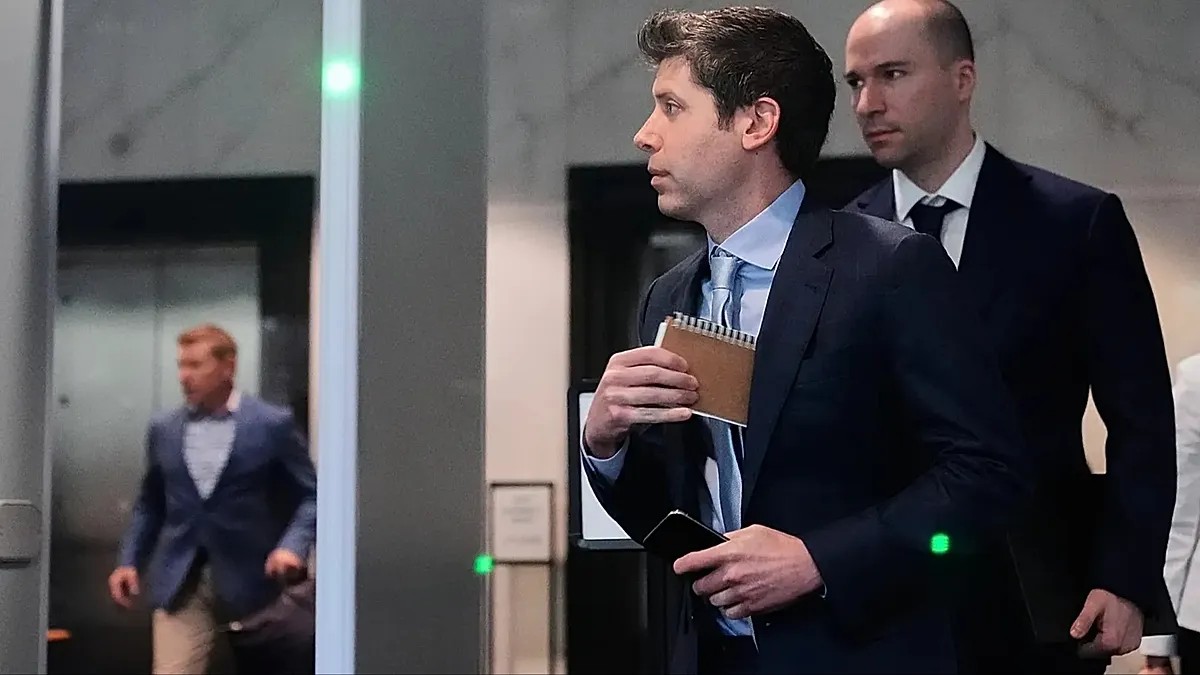
The legal battle between OpenAI CEO Sam Altman and Elon Musk has reached a critical juncture. On Tuesday, Altman took the witness stand to defend his integrity and leadership during the formative years of the artificial intelligence giant. This testimony marks the third week of a trial that could fundamentally reshape the future of one of the world’s most valuable tech companies.
At the heart of the dispute is a question of trust and structure. Musk alleges that he was misled when he donated $38 million to OpenAI in 2015, believing his funds were supporting a nonprofit charity dedicated to benign AI. He claims Altman orchestrated a shift toward a for-profit corporate model in 2018, diverting resources away from the original charitable mission. For the jury, the verdict will hinge not just on corporate bylaws, but on the character of the men who built the company.
The Core Dispute: Charity vs. Business
Musk’s legal team has painted a picture of deception, arguing that his initial investment was strictly for charitable purposes. Under intense questioning, Altman firmly rejected this characterization.
“I believe I am an honest and trustworthy businessperson,” Altman stated, directly countering testimony that sought to portray him as dishonest.
The stakes extend far beyond a personal feud. The outcome of this trial will determine OpenAI’s corporate structure after it has successfully raised billions in venture capital for its flagship product, ChatGPT. The case raises broader questions about the governance of AI development: Can a company founded on altruistic ideals transition into a high-growth commercial entity without betraying its original backers?
A Fractured Partnership
Altman’s testimony provided a detailed account of the deteriorating relationship between him and Musk, tracing the conflict back to OpenAI’s inception in 2015. At the time, the company’s goal was to develop Artificial General Intelligence (AGI)—AI that matches or exceeds human capabilities.
Altman explained that a primary motivation for founding OpenAI was the belief that AGI could not be controlled by any single individual, regardless of their good intentions. He cited a specific concern regarding Musk’s vision for succession: when asked what would happen to OpenAI if Musk died, Musk reportedly suggested control should pass to his children. Altman described this as a “hair-raising moment” that highlighted the dangers of centralized control over powerful technology.
The Financial Turning Point
The rift deepened as the financial realities of building AGI became clear. Altman and co-founder Greg Brockman initially sought $100 million to launch the company. Musk encouraged them to aim higher, suggesting a $1 billion funding commitment and offering to cover any shortfall.
However, as the team realized that achieving AGI required vast computing power and billions of dollars annually, the nonprofit model proved insufficient. To secure the necessary capital, they proposed creating a for-profit entity.
According to Altman and internal company records, negotiations broke down because Musk demanded:
* Majority equity in the new for-profit company.
* Control over the board of directors.
* The position of CEO.
Altman alleged that during these stalled negotiations, Musk withheld his pledged funding and attempted to have Tesla absorb OpenAI—a move that conflicted with the company’s independent mission. Ultimately, Musk left the organization to focus on building a competitor to Google’s DeepMind, leaving OpenAI to navigate its path alone.
The Human Cost of the Split
Despite the legal acrimony, Altman’s closing remarks revealed the personal weight of the conflict. He acknowledged that he once held Musk in high regard, viewing him as a visionary ally in the early days.
The shift from respect to resentment, Altman explained, stemmed from a sense of abandonment. He felt Musk failed to honor his promises, jeopardized the company’s mission, and ultimately turned against the very people he had helped launch.
“It’s been an extremely painful thing for me … to have someone that I respected so much not acknowledge that and continue to publicly attack us,” Altman said.
Conclusion
The trial between Altman and Musk is more than a legal skirmish; it is a defining moment for the AI industry. As the jury weighs the evidence, they are deciding not only on the validity of Musk’s claims but also on the legitimacy of OpenAI’s transition from a nonprofit experiment to a global commercial powerhouse. The verdict will set a precedent for how future AI ventures balance ethical origins with the harsh demands of scaling technology.