The traditional automotive design process is a marathon. For decades, a single new model has required a half-decade of intensive labor, moving from hand-drawn sketches to clay models, and eventually to complex 3D digital simulations. This long lead time means that the cars hitting showrooms today were often conceptualized years ago, under different economic and regulatory climates.
However, the industry is facing a period of unprecedented volatility. Shifts in global political landscapes, the rollback of EV incentives, and new trade tariffs are forcing manufacturers to pivot rapidly. To stay agile, carmakers are turning to agentic AI to compress the design and development window from years to months.
From Sketches to 3D Realities
The first major shift is occurring in the creative studio. Traditionally, turning a designer’s sketch into a high-fidelity 3D model and animation required multiple teams and months of work.
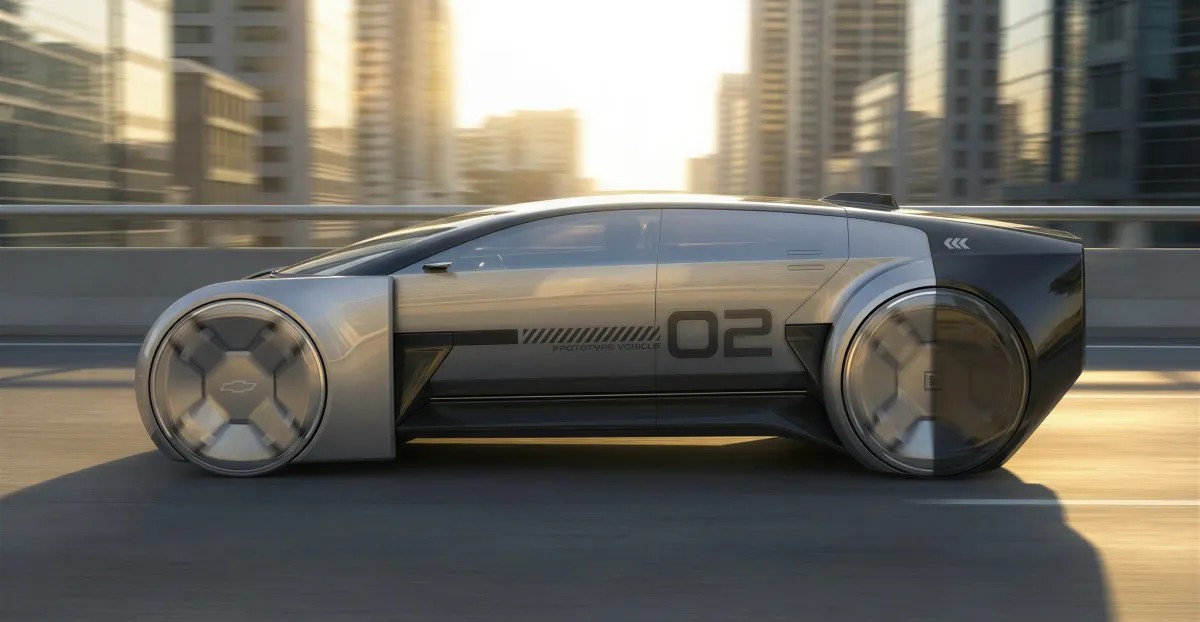
At General Motors (GM), designers are now using AI-driven tools like Vizcom to bridge this gap. By feeding hand-drawn sketches into these systems, designers can generate fully realized 3D models and cinematic animations in a matter of hours.
- The Role of the Human: Despite the speed, designers emphasize that AI is not the “creator.” It acts as a sophisticated rendering engine. Human designers still act as the “monks” of the brand, making the critical aesthetic decisions that define whether a vehicle feels like a Cadillac, a Buick, or a Chevy.
- Rapid Prototyping: These AI-generated visuals serve as “rolling mood boards,” allowing teams to visualize how light hits a surface or how a car looks in motion long before a physical prototype is ever built.
The Virtual Wind Tunnel
Beyond aesthetics, a car’s shape is dictated by physics. Computational Fluid Dynamics (CFD) —the science of how air flows around a vehicle—is essential for maximizing fuel efficiency and EV range.
Historically, CFD required massive supercomputers and hours of processing time. Today, companies like Neural Concept are using neural networks to revolutionize this field:
- Instant Feedback: At Jaguar Land Rover (JLR), aero-engineering tasks that once took four hours can now be completed in just one minute using GPU-accelerated AI.
- Iterative Design: GM is developing an “AI-powered virtual wind tunnel.” Instead of designers handing off a finished model to engineers and waiting weeks for feedback, they can now “push and pull” digital surfaces and receive near-instantaneous drag predictions.
- Early Integration: Because the physics can be simulated almost instantly, aerodynamic testing can begin much earlier in the design phase, preventing costly redesigns later in the cycle.
Software and the Coding Bottleneck
As vehicles become “software-defined,” the complexity of their internal code has become a major bottleneck, often delaying launches and inflating costs. Nissan is addressing this by using AI to automate menial software development tasks, such as unit testing. By automating these repetitive coding processes, manufacturers aim to increase both the speed of deployment and the overall quality of the vehicle’s digital architecture.
The Human Cost of Productivity
While manufacturers argue that AI is a tool for “amplification” rather than replacement, the industry remains divided on the long-term impact on the workforce.
“The value comes from the combination of AI speed and human judgment, not from removing the human from the equation.” — Pierre Baqué, CEO of Neural Concept
The corporate line is that AI allows employees to focus on high-level creative work rather than “menial tasks.” However, critics and educators suggest a different reality. Matteo Licata, a professor at IAAD, argues that such a massive boost in productivity will inevitably lead to reduced headcounts in design studios. This creates a daunting barrier for the next generation of designers, who must compete in an industry where the “entry-level” manual tasks are being automated away.
Conclusion
The automotive industry is racing to replace a five-year development cycle with a much more agile, AI-driven workflow. While this transition promises faster innovation and better efficiency, it also raises fundamental questions about the future of design jobs and the balance between machine speed and human artistry.