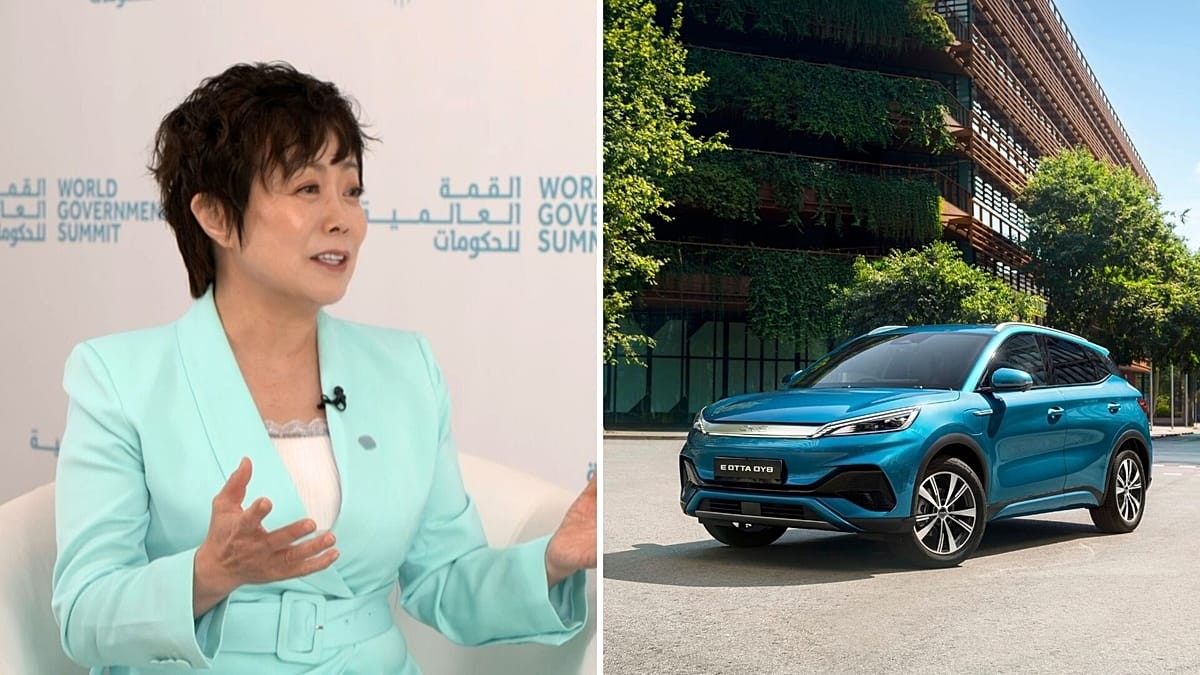
BYD, once a battery manufacturer, has risen to become a leading electric vehicle (EV) producer, recently surpassing Tesla in global sales with 2.26 million battery-electric vehicles sold in 2025 compared to Tesla’s 1.63 million. The company’s executive vice president, Stella Li, attributes this success to a clear, long-term vision—a focus on innovation, manufacturing expertise, and strategic expansion.
The Foundation: Manufacturing Muscle and Diversification
BYD’s deep roots in consumer electronics supply chains give it a significant advantage. The company produces components for approximately one-third of the world’s smartphones, demonstrating mastery in precision manufacturing and quality control. This foundational expertise translates directly into EV production, allowing BYD to offer a diverse range of models—from high-performance hypercars like the U9 Xtreme (capable of 308.4 mph) to affordable urban vehicles such as the five-star Euro NCAP-rated Dolphin.
Tackling EV Adoption Barriers: Ultra-Fast Charging and European Investment
A major hurdle for EV adoption remains charging infrastructure, especially in regions with higher electricity costs like Europe. BYD is addressing this through aggressive investment in ultra-fast charging technology and localized production. Their 1-megawatt charging system promises 400 kilometers of range in just five minutes—rivaling the speed of refueling a gasoline car. The company plans to deploy around 3,000 fast-charging stations across Europe by the end of the year.
Local Production in Europe: A Counter to Trade Uncertainties
Despite potential trade barriers, BYD prioritizes long-term stability through local manufacturing. A €4 billion production facility in Hungary is set to open in the second quarter of 2026, signaling a firm commitment to the European market. Li dismisses trade tariffs as short-sighted, arguing that they ultimately harm consumers and hinder growth.
Expansion into New Markets: The Middle East and Beyond
BYD views the Middle East as a key growth area, particularly for autonomous driving, robotics, and energy storage. The company has already secured a national partnership with the UAE government for battery storage solutions. Li emphasizes the importance of delivering value, quality, and reliable after-sales service to ensure lasting success in these markets.
“For BYD, we have a long-term commitment to Europe and the GCC area… You need to make sure you bring good value, and most importantly, quality and good after-sales service.”
This proactive approach—combining technological innovation with strategic investment and localized production—positions BYD for sustained dominance in the evolving EV landscape. The company’s success is not just about building electric cars; it’s about building an ecosystem that overcomes the challenges of adoption and delivers long-term value to customers worldwide.