Kate Gombach made it to four years of recovery.
It didn’t feel possible when she started.
Growing up meant Paris Hilton, Nicole Richie, and the grim aesthetic of “heroin chic” staring back from every magazine cover. She thought shrinking her body was just the rent she paid for existing in it. Now? She’s free.
Until the GLP-1s came.
Gombach calls semaglutide drugs like Ozempic and Wegovy “one of the most popular medications of 21st century.” A nice way of saying they are a landmine.
For months, she’s watched celebrities and influencers shed pounds instantly. Creators who preached body positivity yesterday are posting before-and-after pics today, usually hiding the fact they’re getting paid.
“I didn’t realize that living the way I’m living now was even an option,” Gombach said. She pruned her feed. Unliked ads. Still, the algorithm pushes weight loss content at her.
“It’s not easy.” She’s just trying to hold on while everyone else seems to switch teams.
The $700 Million Distraction
She isn’t the only one struggling.
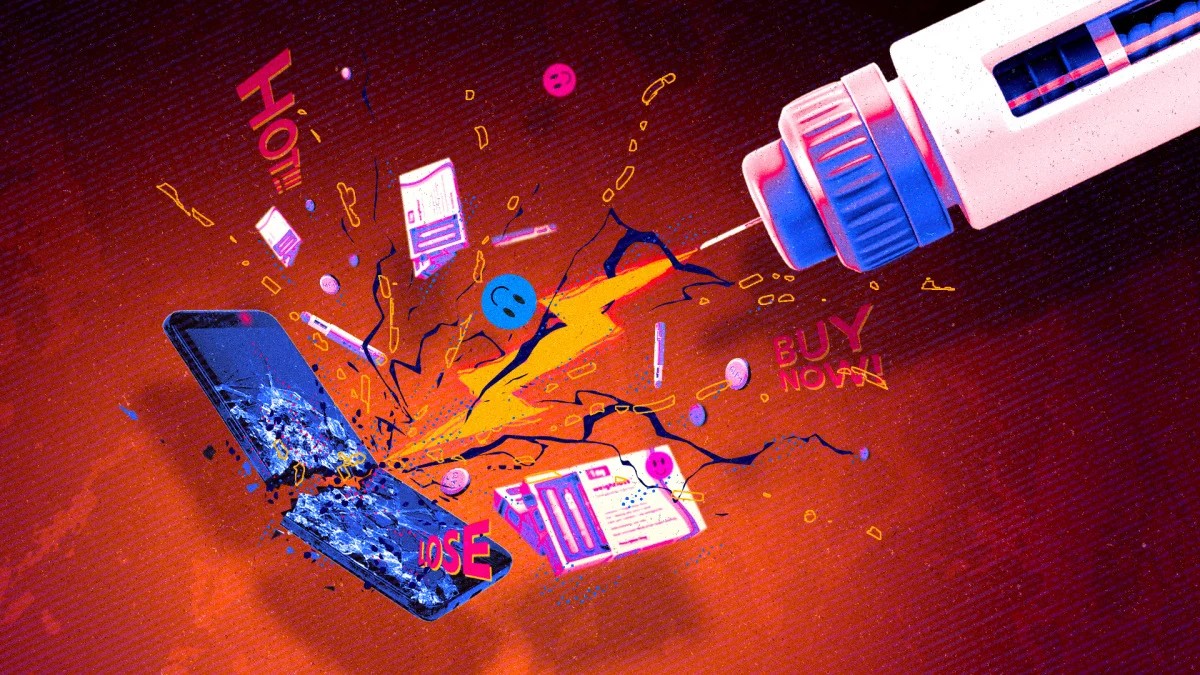
Pharma companies Novo Nordisk and Eli Lilly dropped $700 million on ads for Ozempic, Wegovy, Mounjaro, and Zepbound in the first nine months of 2 025. That money bought you visibility.
It made diet culture inescapable again.
People are flocking to black markets for “retatrutide” a drug the FDA hasn’t even approved because they see thinness as a moral virtue online. Wellness gurus who fell off the radar in the late 2 010s are back, selling the same old shame in new packaging.
“Many people feel like they’ve came through on the other side… but it’s a hard thing protect now.”
- Jessica Scheer, NEDA
Gombach needs social media. It connects her with others in recovery, something her offline life didn’t provide. But experts say the same platforms are dangerous. The line between inspiration and trigger is thinner than a strand of hair, and harder to police.
Equip surveyed 8 28 adults this year. GLP-1 ads showed up unprompted as a top stressor. Clinicians at NEDA report weekly talks with patients whose disordered eating flared up specifically because of these ads.
It’s getting worse. JAMA Psychiatry published research suggesting GLP-1 usage might be higher among those with eating disorders anyway. People already restricting food might just want to restrict it more, faster.
The Algorithm Knows When You’re Hurting
Here’s the scary part.
It’s not just about who posts. It’s about what the machine feeds you.
University of Melbourne researchers tested TikTok’s algorithm in 202 4. Users with a history of disordered food were served more “toxic” content than those who weren’t. The system assumes lingering on a sad video equals engagement.
Engagement equals money.
Money equals more sad videos.
Dr. Blair Burnette of Michigan State calls it “extremely disturbing.” You pause on a clip? Search for a unrelated term? The feed floods with weight loss imagery.
It’s a trap.
Even seeking “positive” content backfires. Equip found that people looking for body-positive accounts often get rerouted to fitness transformations or restrictive “clean eating” tips.
“It’s a great business model,” said weight inclusivity advocate Sharon Maxwell.
Hijacking the Language
The marketing is clever. Insidiously so.
GLP-1 ads talk about quieting “food noise.” They promise control. They mimic the exact rhetoric people in recovery use to cope.
It feels like help.
It’s just another product.
Maxwell knows. After escaping a cult-like upbringing, they built a career in weight-inclusive health, even consulting with Meta on age-gating for disordered content.
Those safety teams are gone now. Or smaller.
Anti-fat content is rising. Creators Maxwell used to support are posting sponsored GLP-1 reviews.
The industry co-opted recovery language. “Take control of your body” sounds empowering. If you’re anorexigenic, it sounds like a command to stop eating.
The Shame Spiral
GLP-1s rarely get criticized, said Dr. Elizabeth Wassenaar of Eating Recovery Center. They result in thinner bodies, and our society loves thin bodies, even while we reject vaccines and vitamins for infants.
For someone in recovery, this normalizes a dangerous narrative.
“You could take the drug. You could diet. You eat salad. You choose not to? That’s why you’re broken.”
Wassenaar calls it insidious. It generates pure shame.
Gombach has heard it from doctors. Despite being healthy, two of hers prescribed her GLP-1 based purely on her BMI.
She wonders: Would people be nicer to me if she were smaller?
Maxwell feels the pull too. “I know what happens if I intentional weight loss,” they said. “Relapse.”
Surviving the Feed
Gombach didn’t quit. She specializes in mental health counseling now, yet she still fights her own brain.
She uses Acceptance and Commitment Therapy techniques.
1. See the trigger.
2. Acknowledge it doesn’t align with your values.
3. Move on.
She also curates ruthlessly. Someone mentions GLP-1? Unfollowed. Diet content? Mass unfollow.
But ad settings don’t stop everything.
Dr. Erin Parks of Equip puts it bluntly: staying on these platforms while in recovery is “attempting not to drink but spending time in bar.”
Parks suggests curating with a clinician. Monitoring feelings before, during, after scrolling. Being honest about why you pick up the phone.
Maxwell stepped back too. They stopped talking about recovery years ago, choosing to celebrate joy in a larger body instead.
“My life isn’t about recovery. Recovery allows me have life.”
Hope? Maxwell says there is some.
It’s weak. Fragile. Like a thread snapping in wind.
But she’s holding on.
Tight.