Traditional market research is broken. In an era where a single viral video can shift global brand perception in hours, the standard 12-week survey cycle is no longer a tool for insight—it is a liability. By the time data reaches a Fortune 500 executive’s slide deck, it is often outdated, leaving decision-makers navigating volatile geopolitical and economic shifts with blinders on.
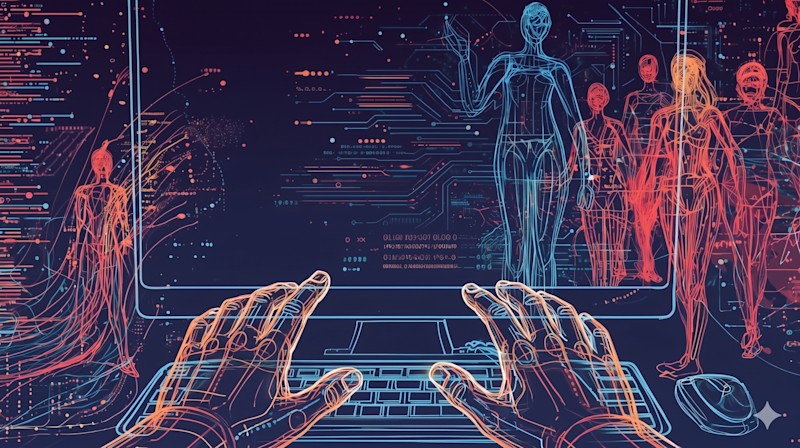
Enter Brox, a predictive human intelligence startup that has raised fresh funding after reporting 10x revenue growth in the last year. Their solution is radical: a “parallel universe” of 60,000 digital twins —one-to-one behavioral replicas of real people—that allow enterprises to run unlimited, instant experiments.
“These digital twins are one-to-one replicas of actual, real individuals,” says Brox CEO Hamish Brocklebank. “We recruit real people like a normal panel company does, pay them to interview them, and capture all the data around them — fully consent-driven.”
The Problem with Synthetic Audiences
The core innovation at Brox is not just speed, but fidelity. Many competitors in the “digital audience” space rely on synthetic personas generated by Large Language Models (LLMs). Brocklebank argues these models produce what he calls “AI slop.”
Purely synthetic audiences tend to cluster around tight, unrealistic distributions. They often over-index for “correct” or socially acceptable behaviors—such as eating healthy or voting responsibly—because of inherent biases in their training data. This creates a false sense of certainty that fails to reflect the messy, nuanced reality of human decision-making.
Brox’s approach is different. Instead of generating generic personas, they build behavioral replicas based on exhaustive real-world data.
How the “Digital Twins” Are Built
The process is intensive and focuses on depth over breadth. For each of the 60,000 twins, Brox maintains up to 300 pages of text data, which Brocklebank claims is the deepest per-person dataset in existence.
- Deep Interviews: Participants undergo hours of real and AI-driven interviews.
- Psychological Profiling: Data collection goes beyond demographics to uncover fundamental “decision drivers,” including upbringing, relationship dynamics, and marital stability.
- Reasoning Chains: To solve the “black box” problem of AI, Brox provides a step-by-step explanation for every prediction. Clients don’t just see what a twin will do; they see the psychological why behind the decision.
This allows high-stakes industries to simulate reactions to complex scenarios. For example:
* Finance: “If America invades Iran, will depositors at Bank of America withdraw funds or increase savings?”
* Pharma: “If a political figure makes a specific statement about vaccines, how will public hesitancy shift?”
Solving the Recruitment Bottleneck
One of the most significant hurdles in traditional research is recruiting hard-to-reach demographics. Brox has already digitized high-value cohorts that are typically difficult to access, including high-net-worth individuals (worth over $5 million) and specialized medical professionals like dermatologists.
To keep these profiles accurate, Brox uses a unique incentive structure. Real-world counterparts are re-contacted frequently to update their data. For high-value participants who are not motivated by small cash payments, Brox offers Stock Appreciation Rights (SARs). This effectively makes the participants “investors” in the company’s success, ensuring they have a vested interest in providing high-fidelity, up-to-date personal updates.
Business Model and Pricing
Brox operates as a high-end Software-as-a-Service (SaaS) platform, moving away from the per-respondent pricing models of traditional research firms.
- Entry-Level: Subscriptions start at $100,000 per year.
- Enterprise: Large-scale contracts for global data access and multiple teams can reach $1.5 million per year.
- Unlimited Usage: Clients are granted unlimited queries during the contract period. This removes the friction of incremental costs, encouraging a culture of “testing everything” before deployment.
From a privacy standpoint, the platform is built on a fully consent-driven framework. While the twins are based on real human data, the output provides aggregated behavioral insights that protect participant anonymity while maintaining predictive power.
Why Not Just Use Prediction Markets?
The rise of prediction markets like Kalshi and PolyMarket has led some to question the need for deep behavioral modeling. These platforms allow users to bet on outcomes, providing quick probabilistic data on events like elections.
However, Brox’s leadership maintains a distinct distance from these models, citing a lack of utility for business strategy.
“Knowing there is a 60% chance of a certain candidate winning does not help a company adjust its consumer strategy; knowing why a specific cohort of depositors is feeling anxious does,” Brocklebank notes.
Prediction markets tell you what might happen; Brox tells you how and why people will react, enabling proactive rather than reactive decision-making.
The Future of Human Intelligence
Backed by investors including Scribble Ventures, Wonder Ventures, and Vela Partners, Brox is betting that deep human data will remain a resilient moat against commoditized synthetic models. With launches planned for the Middle East and APAC, the company’s ultimate goal is to simulate the entire world as a risk-free environment for decision-making.
In a world where speed is everything, Brox argues that understanding the human element—deeply and instantly—is the only way to stay ahead.