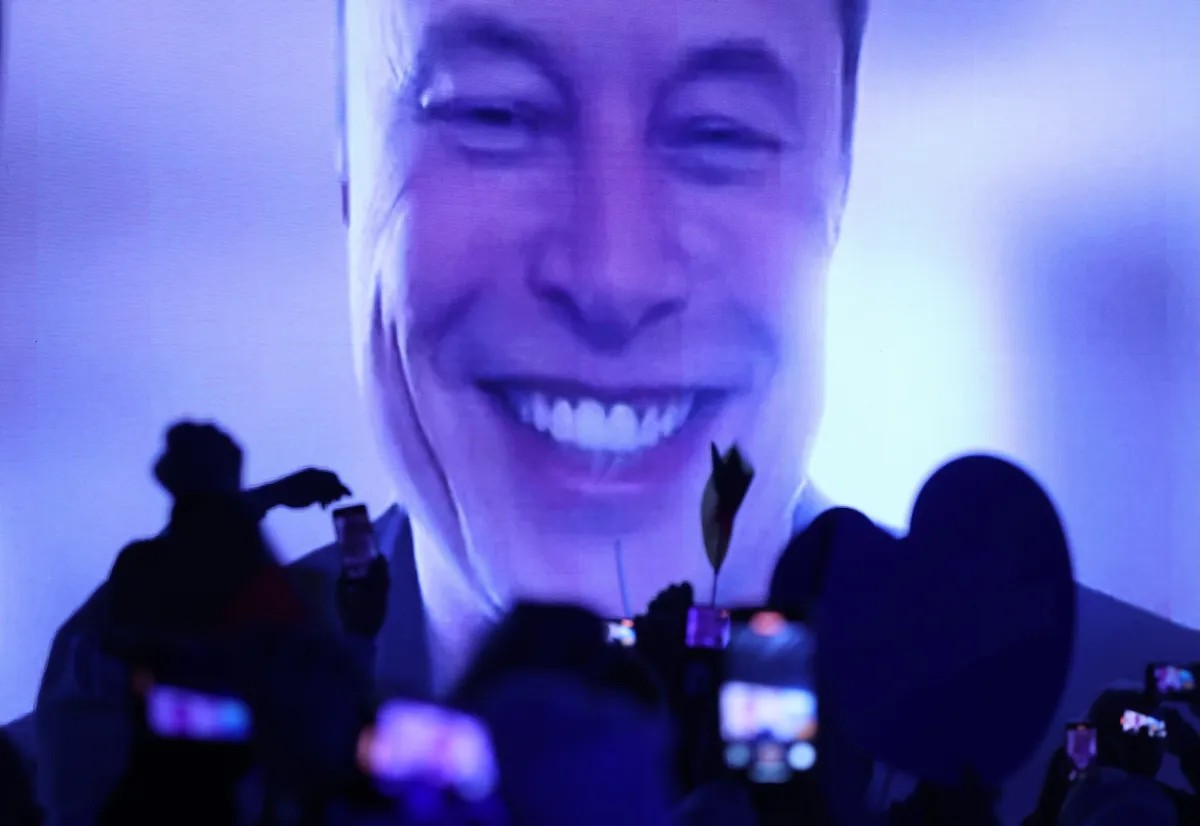
Elon Musk just blew a hole in reality again. Or at least, he tried.
During SpaceX’s very first earnings call as a public company, the CEO floated claims that made even his own executives wince. Gwynne Shotwell and Bret Johnsen spent the hour pulling those ideas back down to Earth, carefully hedging projections and grounding the excitement. It was a tense, revealing performance. If this is how they operate when the stock price is visible, brace yourself.
The dynamic is familiar. Musk promises the stars. Executives promise quarterly guidance that doesn’t trigger a SEC subpoena. It’s the Tesla playbook, now exported to orbit.
Starlink: A Majority of the World’s Internet?
Let’s start with the headline grabber. Musk didn’t just say Starlink would be big. He said it would dominate.
He expects Starlink to deliver the majority of the world’s internet. Within less than ten years.
He cited the upcoming launch of “V3” satellites as the catalyst. Higher bandwidth. Better physics. The usual pitch.
Here is how Musk phrased this massive leap:
It’s not out of the question… at least in countries where we’re allowed. Not infinity future. Less than 10 years.
Shotwell followed up four minutes later. Her language was tighter. Legal-ready.
She promised a “significant portion” of global traffic. “Pretty great service.” Better speed. More customers.
Same ambition. Different armor. Musk speaks in absolutes. Shotwell speaks in percentages.
This isn’t just style. It’s liability.
The $100 Billion ARR: A Tale of Two Numbers
Then came the money. Specifically, the cloud services boom.
SpaceX isn’t just launching rockets anymore. It’s leasing compute power to AI firms. And it’s printing cash.
CFO Bret Johnsen laid out the financials with surgical precision. He cited robust demand. Favorable economics. A “less than one-year payback” on new capital.
He gave a specific, hedged number. $100 billion in Annualized Revenue Run Rate (ARR) by the end of the year.
He mentioned Cursor, the AI coding tool. He mentioned a $6.7 billion contract signed in early Q3. It was careful. It was defensible.
Twenty minutes later, Musk bulldozed it.
That’s what we would achieve if we basically did nothing. Probably will be higher than that.
He didn’t hedge. He didn’t say “we hope.” He said it’s inevitable. And it will exceed the number his CFO just carefully calibrated.
Musk also shifted the trillion-dollar revenue target up. From 2031. To 2030. He even tossed out the idea that 2029 might be possible. “Non-zero chance.”
Johnsen was talking about contract momentum. Musk was talking about destiny.
Artemis, Starship, and the Heat Shield Problem
The pattern repeated. Every time Musk spoke, the bar moved higher. Then Shotwell pulled it back to NASA’s timeline.
A shareholder asked about the Human Landing System for the Artemis missions. Musk claimed Starship could fly people by the end of next year daily. Or more.
Shotwell corrected the record. NASA dictates the pace. Not Musk. The goal is “boots on the ground” by 2028. Ambitious, but rooted in mission milestones.
Then there’s the heat shield.
Starship has to survive re-entry. Repeatedly. Fully reusable. The heat shield is the weak link. It has shattered before. It has melted.
The recent test flight in the Indian Ocean showed progress. The stage intact. Splashdown successful.
Musk called the issue “solved.”
Shotwell didn’t say that. She didn’t need to. The silence was louder.
Why This Pattern Matters Now
Musk has promised Mars by 2024. He promised Model Y in two months. He promised self-driving cars yesterday.
Many of those promises dissolved.
But here is the shift. SpaceX is public.
SEC regulations apply. False statements can lead to fines. Shareholder lawsuits are a real threat. When Musk says something impossible in front of a public market, it’s not just hype. It’s risk.
Shotwell’s job is to mitigate that risk. Johnsen’s job is to provide a floor that holds when Musk flies away.
It creates a weird corporate dynamic. One leg is on Earth. The other is already on Mars.
Will the heat shield hold? Will the cloud revenue hit $100 billion? Will Starlink serve most of the web by 2033?
Nobody knows for sure. Not even Musk. But he’s selling the dream anyway.