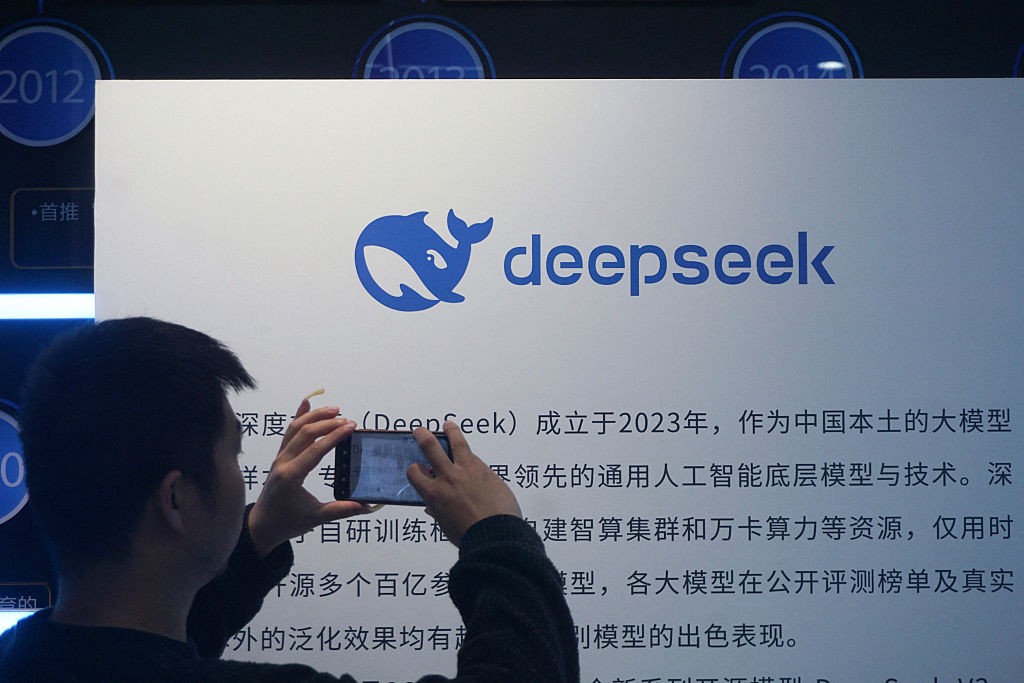
Chinese AI laboratory DeepSeek has officially released preview versions of its latest large language models (LLMs), DeepSeek V4 Flash and DeepSeek V4 Pro. This release marks a significant evolution from the previous V3.2 architecture and aims to challenge the dominance of industry leaders like OpenAI and Google by offering high-level reasoning at a fraction of the cost.
Scaling Up: The Power of Mixture-of-Experts
Both new models utilize a Mixture-of-Experts (MoE) architecture. Instead of activating every single parameter for every request—which is computationally expensive and slow—an MoE model only triggers the specific “experts” (sub-sections of the model) necessary for a given task. This allows for massive scale without a proportional increase in energy or processing costs.
The two models differ significantly in scale:
– DeepSeek V4 Pro: A heavyweight model boasting 1.6 trillion total parameters, with 49 billion active during any single task. This makes it the largest open-weight model currently available, significantly surpassing competitors like Moonshot AI’s Kimi K 2.6.
– DeepSeek V4 Flash: A more streamlined version featuring 284 billion parameters, with only 13 billion active per task, designed for speed and efficiency.
Both models feature a 1-million-token context window, enabling users to process massive datasets, such as entire codebases or lengthy legal documents, in a single prompt.
Closing the Gap with Frontier Models
DeepSeek claims that the V4 series has nearly “closed the gap” with the world’s most advanced proprietary models. The performance breakdown reveals a nuanced picture of where DeepSeek stands in the global AI hierarchy:
1. Reasoning and Coding: The Competitive Edge
In specialized tasks like logical reasoning and programming, DeepSeek’s performance is striking. The company reports that the V4 Pro-Max model outperforms most open-source peers and even rivals high-end models like OpenAI’s GPT-5.4 and Google’s Gemini 3.0 Pro in specific tasks. In coding benchmarks, the V4 models are described as being “comparable to GPT-5.4.”
2. General Knowledge: The Remaining Frontier
Despite its reasoning prowess, DeepSeek admits a slight deficit in general knowledge tests. The models currently trail behind OpenAI’s GPT-5.4 and Google’s Gemini 3.1 Pro in this area. DeepSeek’s own analysis suggests their developmental trajectory sits roughly 3 to 6 months behind the absolute state-of-the-art frontier models.
3. Modality Limitations
Unlike the “omni” models from OpenAI or Google, which can natively process and generate audio, video, and images, the DeepSeek V4 models are currently text-only.
The Price Revolution: High Performance, Low Cost
Perhaps the most disruptive aspect of the V4 release is its pricing strategy. DeepSeek is aggressively undercutting the market, making high-tier intelligence accessible to developers and enterprises.
| Model | Input Cost (per 1M tokens) | Output Cost (per 1M tokens) | Competitive Context |
|---|---|---|---|
| V4 Flash | $0.14 | $0.28 | Undercuts GPT-5.4 Nano and Claude Haiku 4.5 |
| V4 Pro | $0.145 | $3.48 | Undercuts Gemini 3.1 Pro and GPT-5.4 |
This aggressive pricing suggests that DeepSeek is not just competing on intelligence, but on the economic feasibility of scaling AI applications.
Summary
DeepSeek V4 represents a major milestone for open-weight AI, offering massive scale and elite reasoning capabilities at a price point that challenges the industry’s giants. While it still lags slightly in general knowledge and multimodal capabilities, its efficiency makes it a formidable contender for coding and complex logic tasks.