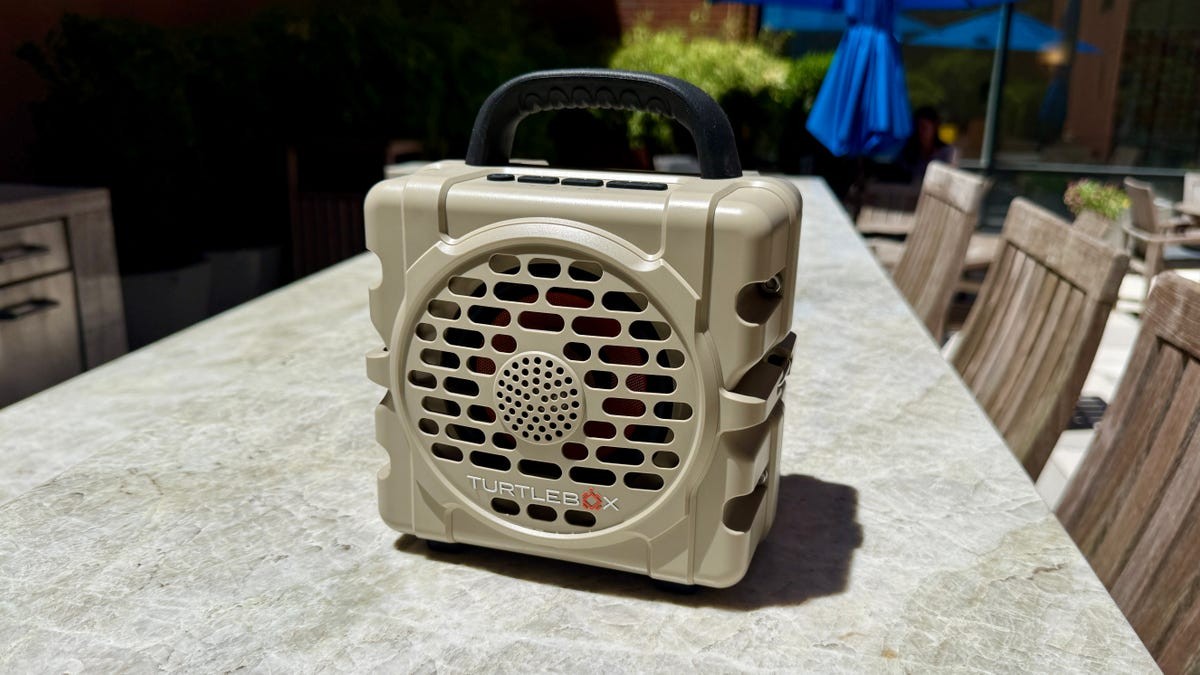
The Turtlebox Cub isn’t just another Bluetooth speaker. It is a shrunk-down beast. Specifically, a miniaturized version of their original model, the Gen 3. That big guy costs $430 and has been around for a while. This one? $330.
Does it sound as powerful? No.
Is it still impressive for its size? Hell yes.
The audio is clean. Detailed, even. Bass thumps with authority while mids sit slightly forward. This placement helps voices cut through. Perfect for talking over waves or wind.
It is expensive. No denying that. But the price buys you extreme durability.
Built to survive the worst of it
Five pounds. Solid as a rock. The Cub carries an IP67 rating. That means fully waterproof. Drop it in the lake? It floats. Submerge it? It survives.
Turtlebox nailed the portability. The Original weighs 10 pounds. It requires an AC adapter. Ancient thinking. The Cub uses USB-C. Plug it into power bank or car. Easy.
You get Bluetooth 5.4. Modern standards apply. Want stereo sound? Pair two Cubs together. Want a party? Link up to six devices. Cubs, Rangers, Grandes all join in. Party mode activates.
“Alas, there’s no companion app.”
That sounds bad until you realize it just means buttons. Physical buttons. Click, click. Done. No software updates required to play your music. There is no EQ tweaking either. The default sound is locked. It works well enough outdoors. Inside, it might feel flat to audiophiles. But who is bringing a rugged tank to their living room?
Comparison time.
The Ranger is smaller. Cheaper. Has magnets for golf carts. But it is quiet. The Cub screams louder. Bigger sound stage. If you have a metal strut and need magnets, get the Ranger. If you want volume? Take the Cub.
Why pay extra for a speaker?
Look at the competition. The Bose Soundlink Max drops to under $350 regularly. Marshall Middleton 2 hovers near $300. Sony ULT Field 5 sells for under $200 on discount days.
Then there is Anker’s Soundcore Boom 2. Around $100. Great value. Poor build.
Where does Turtlebox win? Toughness.
The Cub has that “blue-collar lunchbox” vibe. Not sleek. Not elegant. It looks like it belongs in a muddy workshop. Or tied to a boat rail. It has anchor points on both sides. Stand it up. Lay it flat. Fire the driver skyward.
It doesn’t sound better than the Bose or Sony. Critically speaking? It’s mono. It’s not hi-fi. But it plays loud. Volume wins arguments. And noise.
At moderate volume, the bass is punchy. Full-bodied. Clarity remains high. Voices stand out because those mid-forward frequencies prioritize them.
Battery life is… decent. Not legendary. You get roughly 14 hours at medium volume. At full blast? Five hours. Push it too hard and distortion creeps in. Keep the volume between 40% and 70%. Play it safe. The audio stays tight.
Is it worth $330?
It lacks flash. No RGB lighting. No app tweaks. No bass boost slider. Just raw audio output in a tank.
Weighing 50% less than its parent, it fits in a backpack easily. If your life involves water, mud, sand, or dropping things, the cost makes sense.
For indoor use? Maybe not. It feels out of place on a nice sofa. But take it to the shore. To the trail. To the tailgate. It will keep on rocking.
Is it cheap? Absolutely not.
Is it indestructible? Close.