Social media lets you curate a persona that might be nothing like your real self. You can hop into a virtual world like Second Life, craft an avatar, and slip into a digital skin. For some, it’s a harmless sandbox. For others, anonymity is a mask for deception or worse.
Parents worry. Screens are everywhere now. Home. Classroom. The idea of an online predator lurking behind a cartoon avatar is enough to make any guardian freeze. Bullying happens too. So the question isn’t just about time limits. It’s about safety. Can kids socialize without handing over their private details?
Enter Club Penguin.
Disney bought the platform in 2008 for $700 million. It wasn’t a surprise buy. The site had already proven its pull. Since launching in 2005, it grew to over 12 million users by 2007. The target audience? Tweens aged 6 to 14. The pitch was simple: a walled garden. A place where the chaos of the open web doesn’t exist.
How does it actually work? Is it free? Does it require a credit card that parents need to manage?
Club Penguin Membership
The model was freemium. You could join for free. Basic access allowed you to customize your penguin avatar and explore the island. But to get the full experience—customizing your igloo, buying clothes, chatting with friends—you needed a paid membership. This distinction mattered. It filtered out some of the unregulated chatter found on free-for-all forums. Disney knew that control meant money. But it also meant safety.
Getting into the game is frictionless. You create a penguin, pick a color, and type in a username and password. The site asks for a parent’s email address but stops there. No names. No addresses. No birthdates. It is designed to be easy for kids to handle independently, which is a feature, not a bug.
But a free account isn’t a membership.
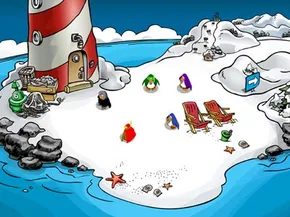
The free tier lets your avatar walk around. You can explore icebergs. You can hit the ski slopes. You can hang out on boats or beaches. You can play mini-games. You can chat with other penguins. That is all well and good for exploration. But if you want the “really cool stuff,” you have to pay.
Specifically, you need a paid subscription to decorate your igloo. And to dress up your penguin with the good gear. Without that membership, you are essentially a spectator in your own digital life.
How much does a Club Penguin membership cost?
If you decide to open the wallet, the pricing structure is straightforward. You have three standard options:
- Monthly: $5.95 per month
- Six months: $29.95
- One year: $57.95
The annual plan offers the best value per month, roughly $4.82 compared to the monthly rate. Sometimes, there are promotional offers. You might see a three-month bundle for $14.95. These deals don’t stick around long though. They are limited-time incentives designed to grab your attention before you commit to the longer terms.
What do you get for the money?
The igloo is the main draw. It is not just a background image. It is a customizable space with depth.
New features drop weekly or monthly, so the catalog never stagnates. You can upgrade your igloo to two stories. You can change the exterior to look like a snow globe. Inside, the choices are vast.
You can place drum sets in the corner. You can install televisions. Aquariums are available. The level of customization is high enough that it becomes a second home for many users. It is where the social interaction really happens. Not in the public squares, but in these private, decorated spaces.
Privacy and payment details
There is a catch to paying. When you buy a membership, the rules change. The company now collects your full name. They take your email address. They obviously need your credit card information and mailing address for billing.
This data collection is a direct result of the transaction. It is not optional if you want the premium features.
However, the chat function remains protected. The site filters important personal information. Your real name, address, or phone number will not slip through the chat filters. It is a safeguard. Even with a paid account, you are not broadcasting your private details to every other penguin in the lobby.
What happens next?
Once the payment goes through and the igloo unlocks, the game shifts. The free world is still there. The public spaces are still open. But the social dynamic changes when you have a decorated home to host friends.
The question becomes less about what you can do, and more about who you want to show it to. The gear you buy. The furniture you place. It all signals something to other players.
Is it worth
The Mechanics of Penguin Life
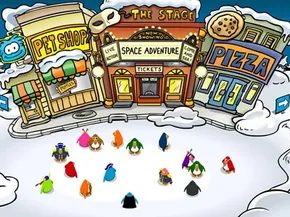
Step into Club Penguin and you won’t find the hyper-realistic avatars typical of worlds like Second Life. Instead, users inhabit a flat, two-dimensional cartoon universe where everyone is a penguin. It’s a deliberate design choice that strips away the complexity of 3D modeling in favor of immediate, accessible interaction. Navigation is brute-force simple. You point, you click, and your Antarctic alter ego slides toward that destination. Drag your cursor to the edge of the screen, and you teleport to a new zone. A built-in map keeps you from getting lost in the sprawling ice floes.
For kids, the platform boils down to four core activities. They can play games. They can dress up their penguins. They can decorate igloos. And they can socialize.
Currency and Customization
The economy runs on coins. Win a mini-game, get a coin. Lose, get nothing. It’s a straightforward loop that drives engagement. These games aren’t complex simulations; they are point-and-click affairs involving skiing, tubing, or dodging obstacles. Instructions pop up at the start, lowering the barrier to entry so even younger children can jump in.
But the real hook is the reward. Coins aren’t just points; they are the key to identity. Users spend them on clothing—hats, wigs, and absurd accessories—and on upgrading their personal igloos. An igloo starts empty and cold. With enough coins, it becomes a personalized shrine. Why does this matter? Because in a virtual space, ownership is the only thing that feels real. Dressing up a penguin isn’t just cosmetic; it’s a statement of status and personality.
Socializing in Bubbles
Communication in Club Penguin is stripped back to its essentials. No voice chat. No complex profiles. Just instant messaging style bubbles that appear above a penguin’s head. It’s comic book logic applied to social networking.
Users host gatherings or attend ones they’re invited to. They make friends. They talk. The simplicity of the interface forces interaction to be direct and visible. You can’t hide behind a screen name or an avatar you don’t recognize. Everyone is a penguin. Everyone is equal. The barriers to entry are low, which means the social circle expands quickly.
Why Parents Care
So what is the actual value proposition here? For children, it’s a safe playground. For parents, it’s a controlled environment. The game filters communication. It limits interaction to pre-approved phrases or simple text, reducing the risk of predatory behavior or exposure to inappropriate content. It’s not a free-for-all. It’s a walled garden.
The benefit isn’t just entertainment. It’s social skill-building in a sandbox. Kids learn to negotiate, to trade coins for items, to host events, and to manage a virtual space. They are learning resource management and social dynamics without the risks of the open internet. It’s a digital nursery.
Is it perfect? No. The graphics are dated. The mechanics are repetitive. But that’s the point. Repetition breeds familiarity. Familiarity breeds comfort. And in a world that can be chaotic and frightening for children, comfort is a luxury.

Why Club Penguin’s Safety Model Matters for Parents
The primary draw for parents wasn’t just the cartoon penguins or the ice igloos. It was the sheer weight of surveillance. In an era where most online spaces operate with wild west-style openness, Club Penguin felt almost Orwellian in its dedication to monitoring behavior. The site didn’t hide its watchdog nature. The home page, designed to welcome new users, prioritized reassurance over cuteness. Keywords like “safety,” “filtered chat,” and “live monitoring” were front and center. A blue badge featuring two penguins—presumably a parent and child—sat in the top right corner, a silent promise that someone was watching.
This wasn’t just marketing fluff. The platform was blunt about its rules. Upon creating an account, the code of conduct was the first thing you saw. The message was simple: respect your fellow penguins. Swearing, bullying, or cruelty were strictly prohibited. Violations didn’t go unnoticed. Site monitors actively scanned for infractions, but users also had the power to report bad actors. The filter went beyond simple profanity. References to drugs, alcohol, sex, or race triggered automatic flags. Personal information—real names, phone numbers, addresses, emails, passwords—was strictly off-limits. Sharing it was a fast track to trouble. Cheating was equally frowned upon. Using third-party programs to gain an unfair advantage in games risked immediate banishment.
The Critique of Virtual Consumerism
So what was the catch? Critics argued the entire model was a commercial trap. Organizations like Consumer Reports WebWatch pointed out that social networks targeting kids often serve one purpose: selling virtual goods. The argument was that these platforms lacked genuine educational value. At Club Penguin, the games weren’t about learning history or math. They were coin farms. You played to earn virtual currency, which you then spent on digital items. It was a closed loop of consumption.
Yet, there was a glaring exception to the rule of online advertising. Club Penguin was largely free of ads. This was highly unusual for a social networking site of its scale. Most competitors drowned users in banners and pop-ups. Club Penguin kept the space clean.
For those digging deeper into the mechanics of these platforms, the links provided in the original reporting offer more context on how social networks operate. The underlying tension remains: how do you balance safety with engagement, and commerce with community? The answers are rarely clean.
Sources
- Agger, Michael. “Ice Ice Baby: My few weeks in Club Penguin, a social networking site for middle-schoolers.” Slate.com. Sept. 14, 2007.
- ClubPenguin.com. (July 6, 2009).
- Davidson, Pete. “Get the Facts on Club Penguin.” What They Play. Mar. 25, 2008.
- Navarro, Mireya. “Pay Up, kid, or Your Igloo Melts.” The New York Times. Oct. 28, 2007.
- Reid, Alice. “Breaking the Ice.” The Washington Post. Oct. 18, 2007.
- Yoffe, Emily. “Gambling and Burger Flipping: What kids like to do online — a Slate investigation.” Slate.com. Sept. 14, 2007.