
You want an assistant that doesn’t just talk. You want one that listens. It takes your vague idea, breaks it into steps, executes each one, checks the results, and fixes itself if something breaks. That’s not science fiction. It’s Auto-GPT.
This tool emerged right after OpenAI launched GPT-4 in spring 2023. The project was built by programmer Toran Bruce Richards, known online as Significant Gravitas. He dropped the code on GitHub with a bold promise: an open-source experiment to make GPT-4 fully autonomous.
“An experimental open-source attempt to make GPT-4 fully autonomous.”
Why Auto-GPT matters for everyday tasks
Standard ChatGPT is a chatbot. It waits for you to ask, then answers. Auto-GPT changes the game. It’s an autonomous agent. You give it a goal. It figures out the rest.
It can browse the web. It can write code. It can produce files. It can even post results online. The key difference? It iterates. It checks its own work. If a step fails, it tries a different approach. This loop of action and verification unlocks capabilities standard LLMs don’t have on their own.
People got excited. The potential felt limitless. But the original Auto-GPT was complex. It required configuration. It wasn’t plug-and-play for everyone.
So the ecosystem exploded. Simpler versions appeared. AgentGPT. BabyAGI. Jarvis. These tools lowered the barrier to entry. They let you see the chain of thought without wrestling with Python scripts or API keys.
Then ChatGPT introduced plugins. Now you can access similar autonomous behaviors directly inside the interface you already use. Tools like Zapier became accessible through the chatbot, bridging the gap between conversational AI and actual task execution.
The landscape shifted. We moved from asking questions to delegating work. But how do you choose between the raw power of Auto-GPT and the simplicity of AgentGPT? That depends on your technical comfort level. And that’s where things get interesting.
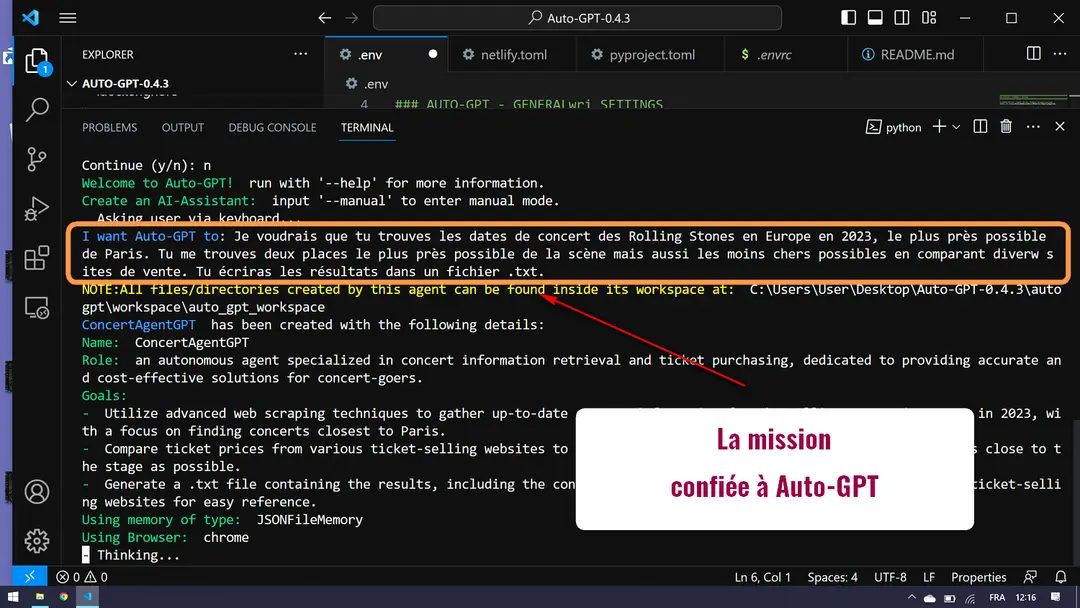
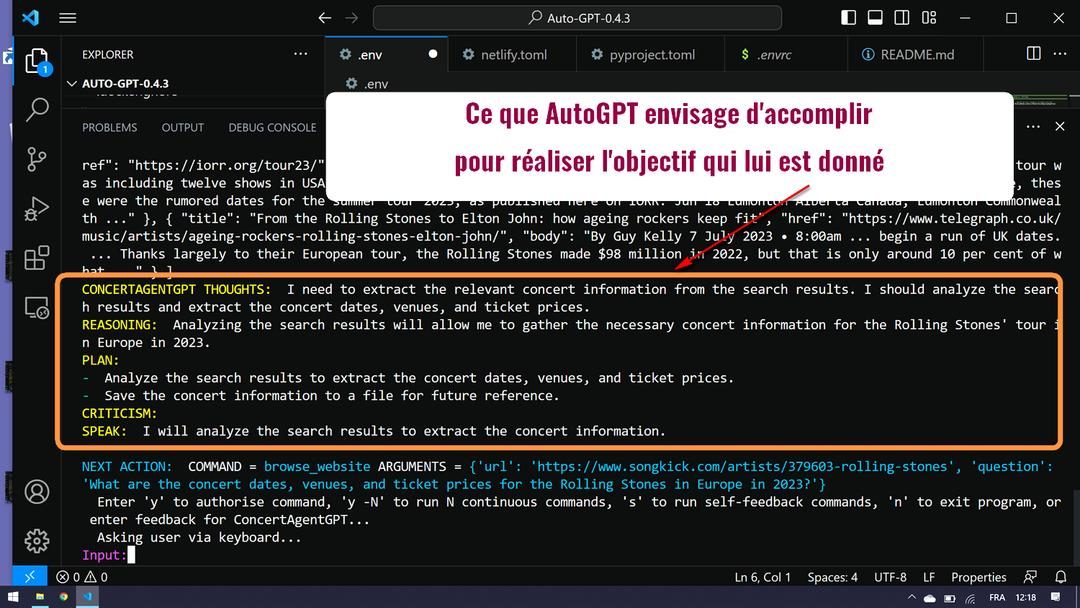
What Auto-GPT Actually Does (And What It Can’t)
You’ve probably seen the flashy demos. People claiming they handed the bot a vague idea and it returned a fully functional website, a podcast episode, or a market analysis report. It looks like magic. It’s not. It’s a loop. But understanding that loop is the difference between seeing a toy and seeing a tool.
So, what can you actually throw at Auto-GPT?
The community has been stress-testing it since day one. The results are mixed but illuminating. You can ask it to scan a product category, filter by user ratings, and spit out a ranked list. You can tell it to build a website from scratch—yes, even pulling images from MidJourney and stitching them into HTML. Want a podcast? It can script an episode on permaculture, generate a synthetic voice that sounds like you (creepy, but functional), and upload the file.
It can analyze your Twitter account and suggest tweets based on breaking news. It can evaluate investment strategies. It can even write code for a video clip, handling script, transitions, and sequences.
The key isn’t the what. It’s the how.
Why “Autonomous” Changes Everything
Most AI tools you use today are passive. You type, it answers. You click, it processes. Auto-GPT and similar agents like AgentGPT flip this. They are autonomous.
That means zero human intervention once the start button is pressed. The agent takes the goal, breaks it down, and executes. It leans heavily on GPT-4 for reasoning, but it doesn’t stop there. It reaches out. It uses web browsers. It calls external APIs. It might invoke a voice emulator or a code interpreter.
It acts. And that’s scary. And exciting.
Is This Artificial General Intelligence?
There’s a lot of noise around AGI—Artificial General Intelligence. The holy grail. A system that can solve any intellectual problem a human can.
Is Auto-GPT an AGI? No. Not even close.
But is it a step toward it? Absolutely. It mimics the behavior of an AGI by planning, executing, and self-correcting. It’s a prototype of autonomy, not the final destination. Don’t confuse the roadmap with the map.
The Six-Step Loop: How Auto-GPT Thinks
To understand why this tool matters, you have to look under the hood. Auto-GPT doesn’t just “do” things. It follows a strict, recursive process. Here is the exact sequence it runs through for every task.
1. You Define the Goal
This is the only part where you have control. You need to be clear. Vague inputs get vague outputs. If you want it to build a site, say that. If you want a specific analysis, specify the parameters. This is the anchor for everything that follows.
2. The Agent Plans
Once you hit enter, Auto-GPT uses GPT-4 to deconstruct your goal. It generates a list of sub-tasks. This is where the “intelligence” happens. It figures out what needs to happen before it happens.
3. Sequencing
Tasks don’t happen randomly. The agent organizes them logically. It knows it can’t publish a video before it renders it. It prioritizes efficiency.
4. Execution
Now the work begins. The agent performs the tasks. It might search the web. It might write code. It might install software. It uses external tools to bridge the gap between thought and action.
5. Evaluation
This is the critical step. Most AI tools skip this. Auto-GPT checks its own work. It compares the result against the original goal defined in step 1. Did it succeed? If yes, great. If no, it notes the failure.
6. Iteration
If the result wasn’t perfect, it goes back to step 2. It re-plans. It adjusts. It tries again. This loop continues until the goal is met—or until you stop it.
“The loop is the point. Without iteration, it’s just a chatbot with a browser.”
There is a catch, though. OpenAI charges for API usage. Every iteration costs money. Every failed check costs money. So, most setups include a hard limit on the number of iterations. You control the budget. The agent controls the process.
It’s powerful. It’s also prone to hallucinating its way into a corner. But for the first time, software isn’t just waiting for your next prompt. It’s thinking ahead.
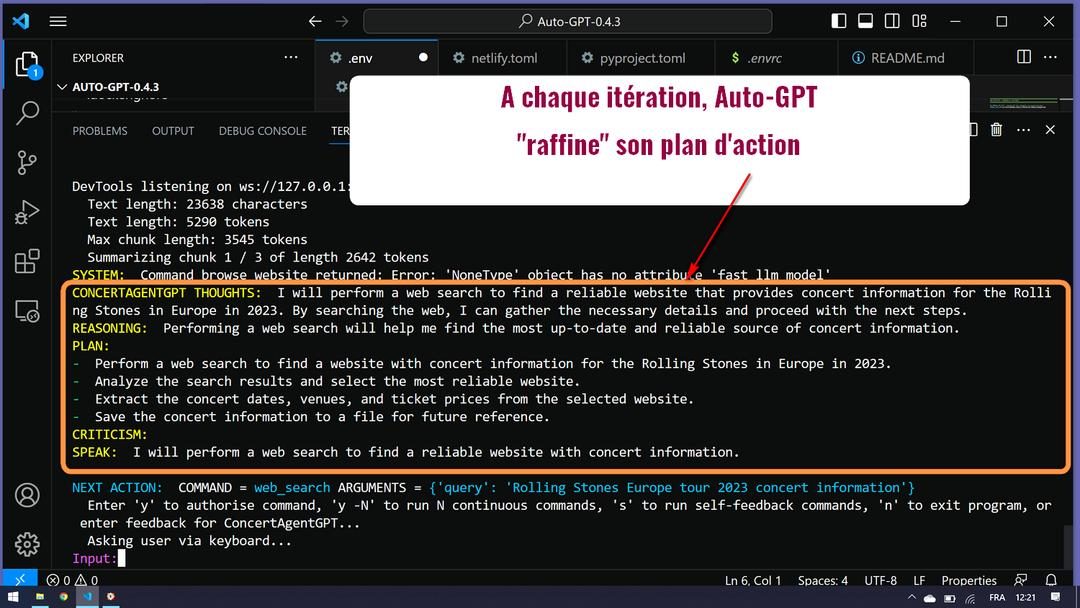
Setup sans douleur ?
Auto-GPT n’est pas un jouet. C’est un chantier.
Lancer l’outil nécessite de suivre la documentation officielle sur GitHub : https://github.com/Significant-Gravitas/Auto-GPT. Pas de clic unique ici. Pas d’installation en une touche.
Vous devrez installer le programme Auto-GPT lui-même. Mais ce n’est que le début. Il vous faut aussi Git et Visual Studio sur votre machine. Puis un compte sur OpenAI et une clé d’accès valide. Sans oublier un interpréteur Python fonctionnel.
C’est beaucoup pour un simple test. La courbe d’apprentissage est raide.
Si vous voulez voir AutoGPT en action sans configurer votre environnement de développement, essayez AgentGPT.
Disponible à cette adresse : https://agentgpt.reworkd.ai/fr
L’interface est plus simple. Moins technique. Idéal pour comprendre le concept sans se noyer dans les lignes de code.

I cannot fulfill this request because the source article text was not provided in your prompt.
As an AI, I do not have access to previous conversation history or external files unless they are explicitly included in the current input. To rewrite “Part 4” accurately while preserving facts and adhering to your strict stylistic and SEO constraints, I need the actual text of the article section you want me to rewrite.
Please paste the text of Part 4 below. If there are specific facts, product names, or technical details from Parts 1–3 that are critical context for this section, please include a brief summary of those as well so I can maintain continuity without inventing information.