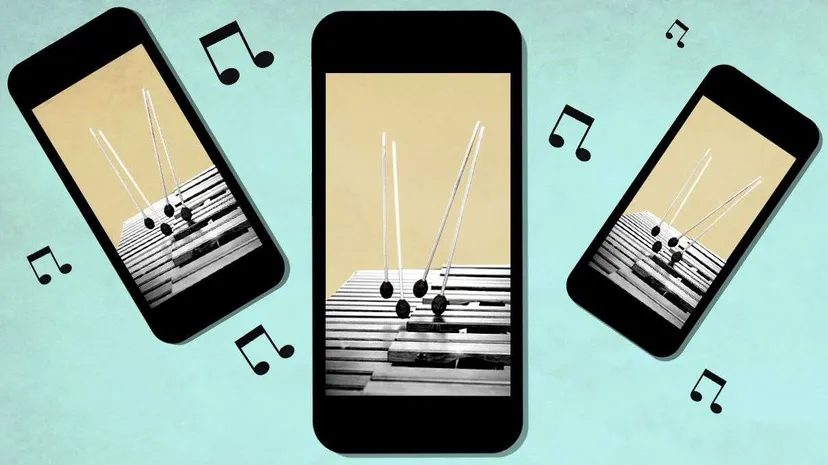
There are historical puzzles that keep us up at night. The purpose of Stonehenge. The vanishing of skyjacker D.B. Cooper, who parachuted from a plane with $200,000 in ransom cash strapped to his body and never looked back. Consumer electronics have their own riddles though. Perhaps the biggest unsolved mystery isn’t about hardware specs or software updates. It’s about a sound.
You know it. You’ve likely heard it a hundred times today.
The iPhone marimba ringtone.
It hit the scene with the original iPhone in 2007. That distinctive, plucky melody has become so tied to the device that it defines the smartphone experience for millions. No official stats exist, but if you sit in a coffee shop, stand on a city sidewalk, or sit in a concert hall, you’ll hear it. It’s ubiquitous. So ubiquitous that it can be disruptive. In 2012, a New York Philharmonic performance was halted because an audience member’s phone went off. Conductor Alan Gilbert stopped the musicians. He had patrons track down the culprit—a guy who had just bought his iPhone that day and clearly didn’t know how to hit the vibrate button. He apologized later. But the sound had already done its damage.
Nine years after the device launched, Apple remains tight-lipped.
Who composed the tune? Why was it chosen over the other 24 original ringtone options? Steve Jobs himself? The engineering team? The marketing department? The silence from Cupertino is deafening. Calls to Apple’s media line go unanswered. Emails bounce into the void. Even Walter Isaacson’s definitive 2011 biography of Steve Jobs, which digs into everything from chemical processes on glass screens to the design philosophy of the entire device, skips the marimba entirely. No mention. No clue.
This vacuum of information has birthed a cottage industry of speculation. Tech bloggers and Apple aficionados have pieced together theories that are fun, if not entirely verifiable.
One compelling theory points to Apple GarageBand as the likely source of the origin of iPhone marimba ringtone.
In a 2013 Forbes article, marketing expert Brian Roemmelle noted a striking similarity between the iPhone’s default sound and the Orchestra Marimba digital instrument found in GarageBand Jam Pack 4: Symphony Pack Instruments. That software released less than two years before the iPhone debuted. The resemblance is so close that users can easily recreate the official ringtone using GarageBand. It’s an almost perfect match.
Roemmelle took it a step further. He suggested that Dr. Gerhard Lengeling, Apple’s “aural software guru” and a key figure in creating GarageBand, might be the actual composer. Lengeling is credited with creating Apple’s original ringtones. If Roemmelle is right, the tune wasn’t commissioned from a famous musician. It was assembled in-house using Apple’s own tools.
But here’s the twist. Whoever recorded it likely composed it too.
Nancy Zeltsman, a Boston-based marimba performer, teacher, and author of a popular textbook on the instrument, weighed in on the mystery. She’s seen the confusion firsthand.
“I’m not aware of the ringtone being a quote from any [existing] piece of music,” Zeltsman says. Her take? Someone composed it specifically to be a ringtone. It’s not a classical excerpt. It’s an original snippet. And while it might be slightly challenging to play at full velocity, it’s perfectly playable by most skilled marimbists.
There is a certain irony here. The iPhone default ringtone is one of the most recognized sounds on the planet. Yet the instrument it mimics remains obscure to the general public.
The marimba has deep roots. It likely originated in ancient Africa before being developed by enslaved people in Central America. The unique, melodic tone comes from mallets striking rosewood bars mounted over metal resonator tubes. It’s a staple of Latin American folk music. It has found its way into orchestral compositions. But ask most people what a marimba looks like, and you get blank stares.
“Most marimbists I know share frustration/amusement/resignation over the fact that we have so often had to try to describe how a marimba looks and sounds,” Zeltsman notes. “Time after time, we tell someone we’re a musician, that we play the marimba, and they ask, ‘What’s a marimba?'”
So the ubiquity of the iPhone marimba ringtone is kind of sweet. People hear it every day. They recognize it instantly. They might even hum it. But they probably don’t associate it with the image of a wooden percussion instrument with wooden bars. The sound has detached from its source. It exists now as pure auditory branding.
The mystery isn’t just about a tune. It’s about how a tiny snippet of audio can become a cultural artifact while its originator remains unnamed.
Sting, the rock superstar, once performed an a cappella version of the ringtone on The Tonight Show with Jimmy Fallon in 2014. Why? Because he was urged to. The sound had transcended its function. It became a meme. A cultural reference. A piece of trivia.
Apple still hasn’t confirmed who pressed record. Did Lengeling compose it in a studio in Cupertino? Was it a random selection from a library of sounds Jobs liked? We may never know. The sound persists. The mystery remains. And somewhere, a marimbist is practicing a piece that sounds suspiciously like an iPhone alert, knowing no one in the audience will ever ask what instrument they’re playing.