You’ve probably messaged your doctor at 2 a.m.
Those messages don’t just vanish. They pile up. And for clinicians, responding to them has eaten away a growing chunk of the workday. So hospitals did what any modern tech-starved organization would do. They brought in AI.
The promise was simple. Speed. Smoothness. Less administrative hell. Philip Barrison, a student researcher at Michigan Medicine, knew what was coming.
It didn’t happen.
The tool didn’t free up doctors and nurses. It gave them a new to-do list. Step one: Read the AI draft. Step two: Decide if it’s something you would actually say. Step three: Edit it until it feels okay.
Sounds easy? It’s cognitively exhausting. Humans are suggestible. Staring at a generated sentence and judging whether it matches your internal voice is hard work. It turns a straightforward reply into a series of judgment calls. Many clinicians have just stopped using the thing.
Good for them. Other workers aren’t so lucky.
The Productivity Lie
Executives are selling a fantasy. Save money. Scale up. Go faster.
Meta told some workers last year to go “5X faster” by using AI to cut friction. Shopify’s CEO told staff they need to prove they can’t do the job with AI before getting approval to hire new people. Some firms are even grading employees on how much they click the magic button.
Do you need a question to see if this is crazy?
The reality? Workers in some niches save time. But in most jobs, the tool doesn’t eliminate the work. It changes the shape of it. You spend less time typing the letter and more time correcting the AI’s hallucinations.
This isn’t just annoying. It’s dangerous. When efficiency metrics become the law of the land, failing to meet them gets you fired. Critics argue that rushing AI into healthcare risks lives. Now, unions and workers are demanding guardrails. They want protection from bosses who value software speed over human sanity.
The hidden cost of AI use
You have a choice. Use the AI to be productive or get automated out of a job.
Aiha Nguyen from Data & Society sees it clearly. It’s that simple. Or so corporations want us to think.
But the data contradicts the boardroom presentations. A 2025 study looked at software developers. They believed they were faster. The stopwatch said otherwise. They took 19% longer to finish tasks. When researchers tried to repeat the test later this year, developers refused. They wouldn’t work without the tools. Addiction sets in fast.
Survey 5,000 office workers. 40% said AI saved them zero time.
Let’s look at the mess on the ground. Take Julie. She’s an art teacher. Her boss says: Use AI for lesson plans. Emails. Reports.
She tried. The plans failed because AI doesn’t understand that kids learn at different speeds.
“First, I am checking what AI suggestions, then I am editing them.
Why add a step I can accomplish?”
— Julie
Same story in an East Coast agency. They needed an AI for pharmaceutical press releases. The goal was to “plug and chug.” Fast output.
The employee kept their name private. Smart. Using the tool meant checking it for errors. The verification killed any time saved. Worse, the AI has a weirdly optimistic tone. It puts a happy spin on bad news.
We humans work at human speed because the nuance is real. The AI misses it. Every time.
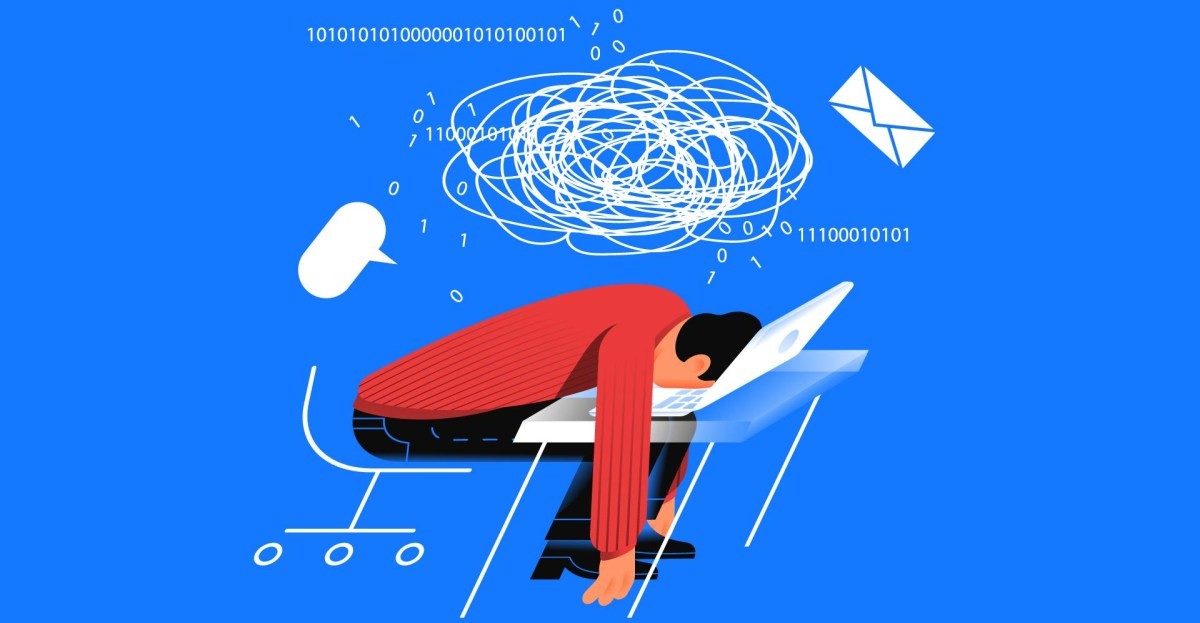
This leads to a new phenomenon: oversight fatigue. Also known as “brain fry.”
A study of 1,500 workers found that monitoring multiple AI agents causes mental fog. Headaches. Slower decisions. Participants described a “buzzing” sensation in their heads. The more tools they managed, the worse it got. One or two tools might help. Four tools and productivity tanks. Errors go up. Desire to quit goes up.
What Actually Works?
Companies keep pushing. They use AI adoption as an excuse to lay off staff. Ironically, companies that fire people citing AI often crash in the stock market.
Some are fighting back. National Nurses United says hospitals can’t let algorithms guess staffing needs or treatment protocols.
Cathy Kennedy, the union president, isn’t having it.
“There’s no guarantee the tools consider the patient’s specific profile… At the end of the day, AI makes it more burdensome.”
She wants nurses at the table. We need to test if the tech actually does what the brochure claims. If not? Turn it off. Philip Barrison agrees. Define the value. If there is none, kill the subscription.
Interestingly, some workers found a loophole. Not the one management intended. Julie uses an AI model to learn about kiln-firing ceramics, a topic she knew little about.
Researchers suggest AI can cut burnout if used right. Julie Bedard from Boston Consulting Group led the brain fry study. She points out that every job has procrastination points.
Boring stuff. Tedious data entry. Those are the spots where AI earns its keep.
But employers never find these spots. Why? They aren’t listening to the rank and file. They’re looking at the dashboard, not the desk.
Aiha Nguyen sums it up. Put worker rights in the center of the conversation. Not the algorithm.
Otherwise we are just feeding data to a machine that thinks it understands nuance while burning out the humans left to clean up its mistakes.